LAND ROVER / CABIN AND EQUIPMENT
Defender updated: premium seats, Bluetooth audio and more colour choices
A familiar working vehicle gained more personalisation and a more accommodating cabin while retaining its established layout.
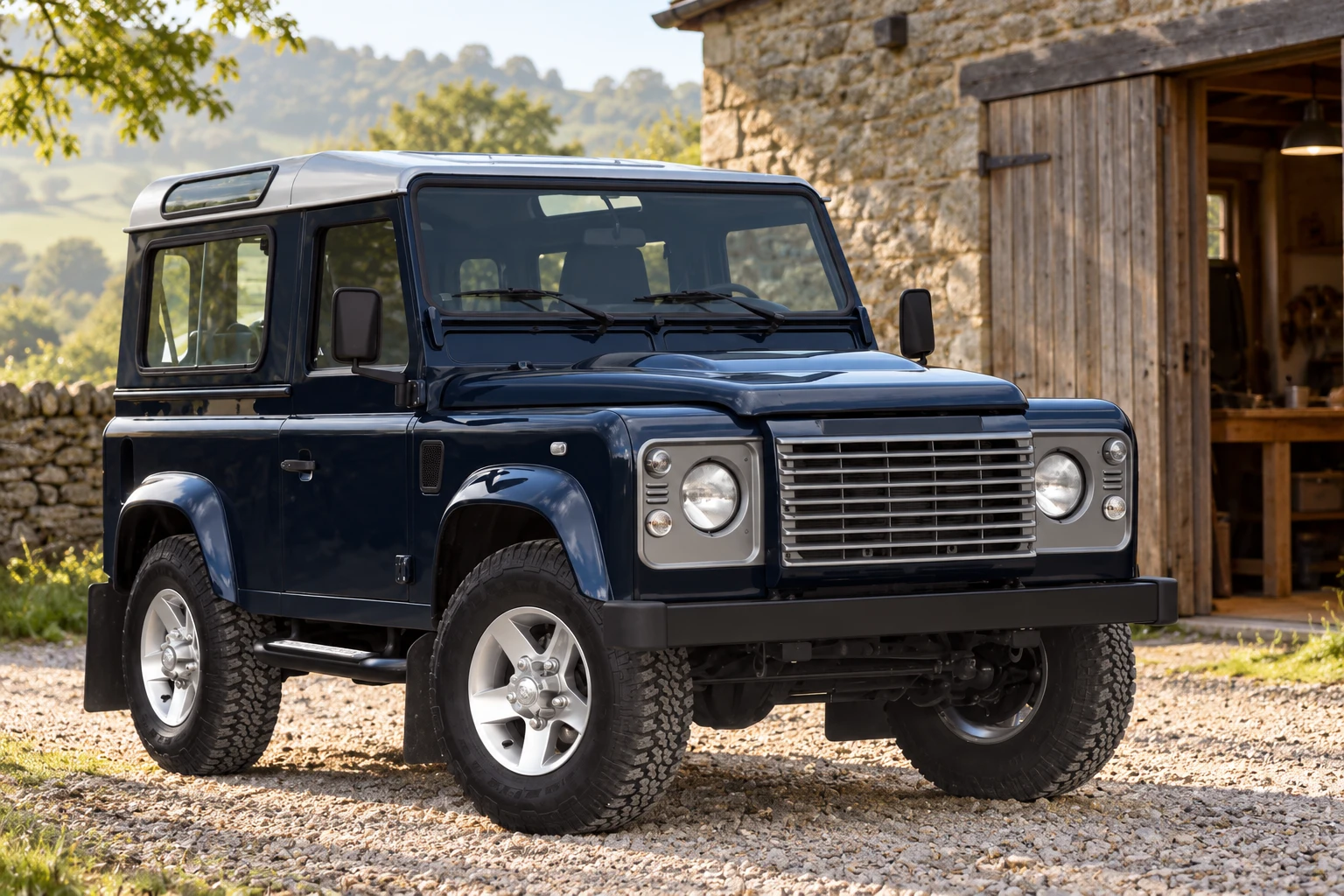
On 30 August 2012, Land Rover’s German announcement set out the classic Defender’s next equipment update, with availability planned from October. New front seats, upgraded audio choices and additional paint combinations defined the change. The period material called it the 2013 model year, but the announcement and planned introduction belonged to 2012.
The update concentrated on how the vehicle looked and how its occupants used the cabin. The familiar body family and three wheelbases continued. The 2.2-litre diesel had already arrived in the preceding development programme; this announcement did not introduce that engine for the first time.
At a glance
- Official German announcement: 30 August 2012.
- Planned availability: October 2012.
- New premium part-leather front seats.
- Audio choices included Bluetooth and a 150W Alpine subwoofer.
- Barolo Black and Havana added to the exterior colour choices.
- Additional contrast roof colours expanded personalisation.
Premium front seats changed the main cabin touchpoint
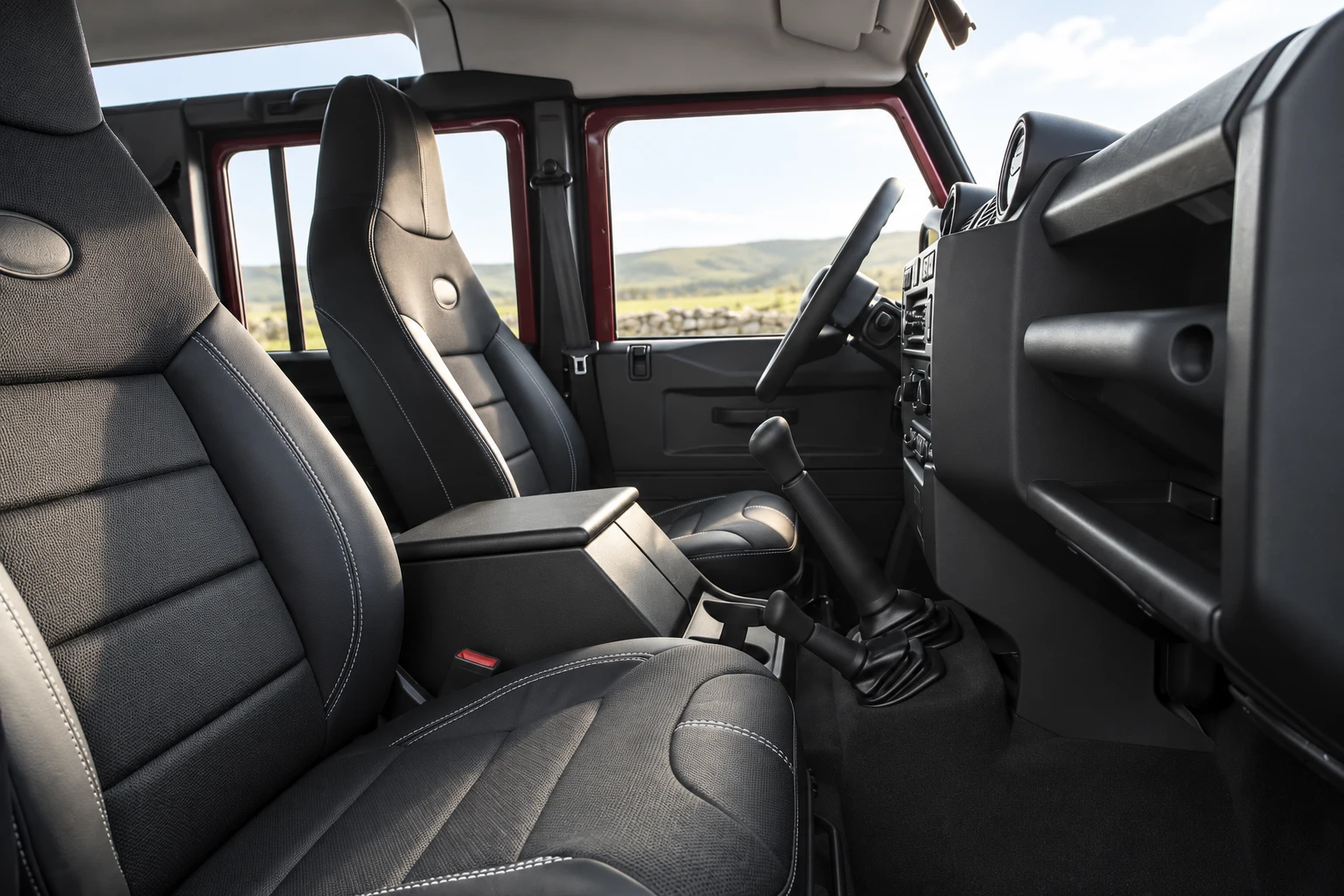
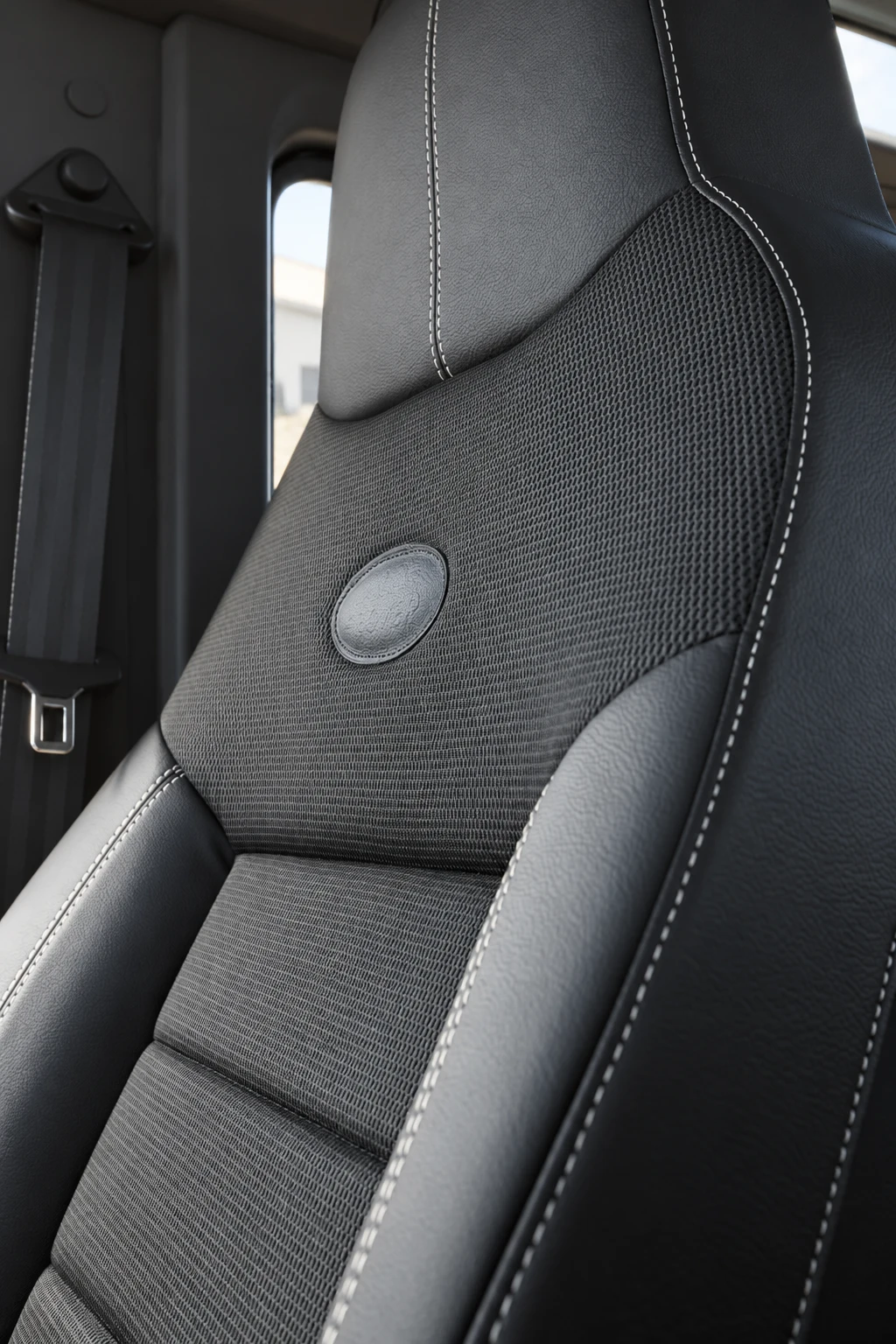
The new premium part-leather front seats used integrated fixed head restraints, prominent vertical stitching and a large embossed Land Rover emblem. The German release offered them in combination with SE variants, making their availability a matter of trim specification rather than a universal standard feature.
The contemporary launch imagery shows how they fitted the existing cabin: the upright dashboard, physical controls, manual gear lever and separate transfer-box control remained recognisable. More supportive-looking upholstery did not require the vehicle to adopt a modern screen-led cockpit.
Seat trim and body configuration should be considered together. The announcement concerned the front seats; it did not describe an identical replacement programme for every rear seat across the wide Defender body range.
Three audio levels in the German equipment list
The German announcement described three optional audio arrangements. The first included a single-slot CD player, MP3 support and AUX/USB connections, with output quoted as four channels of 50W. Its recommended price was €710 in that market.
The second added a Bluetooth telephone interface and hands-free operation, using a microphone integrated into the A-pillar. It was listed at €970. This was a practical addition to a cabin whose original layout had not been designed around a contemporary smartphone.
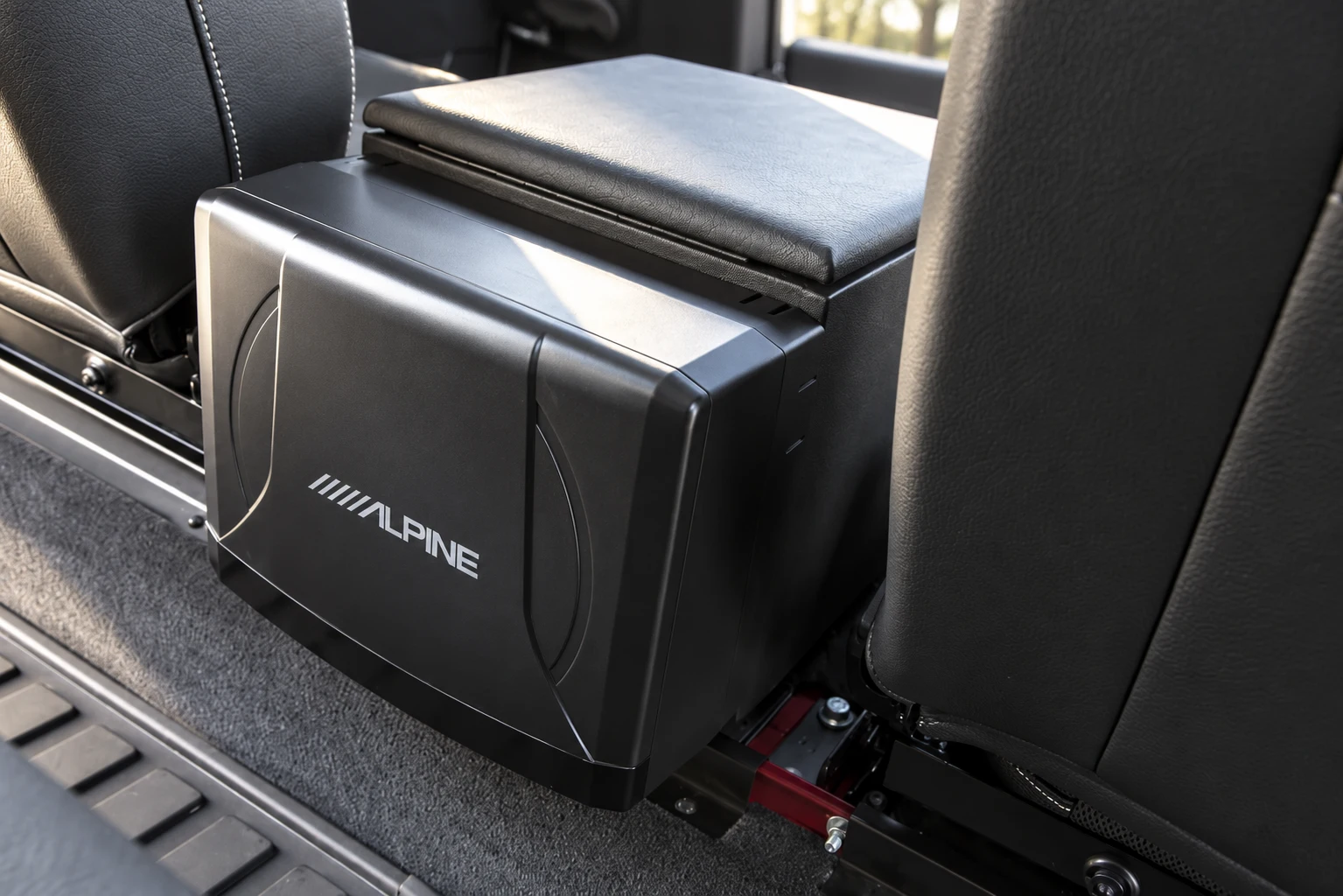
The third, an Alpine premium arrangement at €1,190, added a low-profile subwoofer rated at 150W. That 150W figure described the subwoofer in the announcement; it should not be confused with the four-channel output figure or presented as the total output of every audio option.
| German-market option | Equipment highlighted | Period recommended price |
|---|---|---|
| Audio level 1 | CD, MP3, AUX, USB; 4 × 50W | €710 |
| Audio level 2 | Adds Bluetooth and A-pillar hands-free microphone | €970 |
| Alpine premium | Adds a 150W subwoofer | €1,190 |
The audio hardware had to fit the existing vehicle
The press detail view places the Alpine unit behind the front centre storage box, between the seats. That packaging is part of the update’s character: extra equipment was integrated around the classic cabin’s available space rather than through an entirely new dashboard.
The UK-oriented contemporary report also described upgraded 10cm coaxial speakers in the Alpine Hi Line arrangement. Its description of a base CD/USB/AUX system and optional Bluetooth should be kept in its market context. The German three-price list is not evidence of identical standard equipment or prices in Britain or Lithuania.
For someone identifying an individual vehicle, the installed head unit, microphone, speaker arrangement and subwoofer are more useful than the presence of a single audio badge. Equipment could also have been changed during the vehicle’s later life.
New body colours and a broader roof palette
Barolo Black and Havana joined the premium metallic body colours. The German release quoted a €1,050 option price for either. The roof choice widened beyond body colour or traditional white, adding Santorini Black, Indus Silver, Orkney Grey and Firenze Red as contrast options, listed at €600.
The release did not make every colour and roof combination universally available across all bodies. The wider programme offered combinations across much of the paint palette, so the exact vehicle configuration remained relevant. A press photograph of a dark-blue Defender is useful for identifying the body and cabin generation, but is not evidence that the vehicle is painted in one of the two newly announced colours.
The range still served very different jobs
Defender continued in 90, 110 and 130 forms, with a broad mix of passenger, commercial and chassis-cab configurations. The German announcement’s entry examples were €26,690 for a 90 Soft Top, €29,390 for a 110 Pick Up and €31,190 for a 130 Single Cab Chassis. Those examples did not represent three identically equipped vehicles.
A contemporary UK-oriented report counted 14 body styles across the three wheelbases, with standard and heavy-duty configurations. That diversity explains why a seat, roof or audio option needs a precise application rather than an assumption that every Defender shared one specification.
A detail update with a clear historical identity
The 2012 announcement shows the direction of the classic Defender’s late development: practical improvements and greater choice within a familiar vehicle architecture. Bluetooth, upgraded speakers and different seat trim could matter in daily use without changing the model’s basic identity.
The same German release also announced the limited Rough II edition, whose regional specification deserves separate treatment. The regular equipment programme described here should not be confused with the standard equipment of that special edition, or with the July XTech package. Keeping those distinctions preserves the actual choice a buyer faced at the time.
Illustrations recomposed from period press imagery. Image licence.