JAGUAR / DESIGN PROCESS
C-X16 in clay: making the design process visible
The full-size model showed surface development rather than a new running prototype.
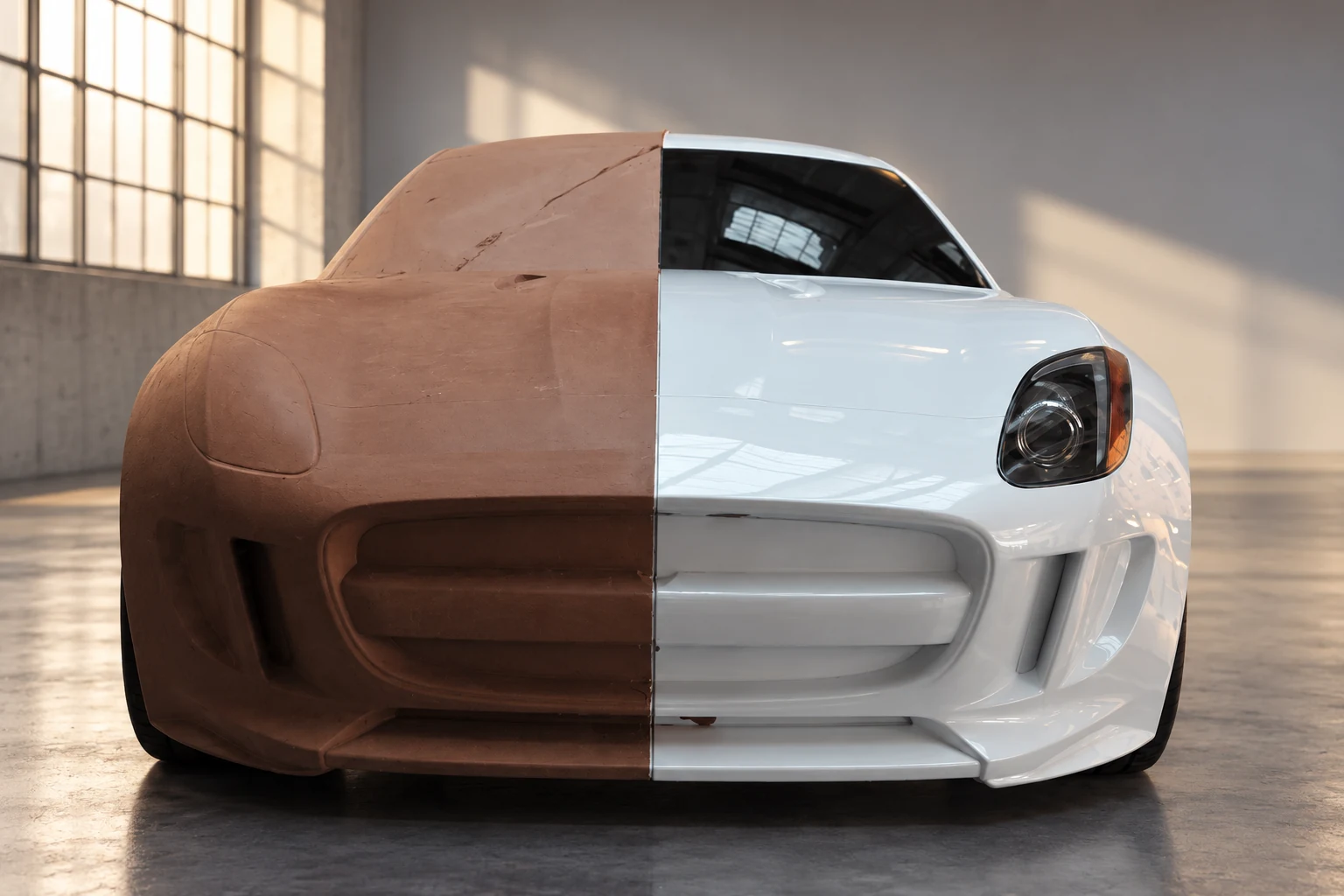
At Clerkenwell Design Week on 22–24 May 2012 Jaguar displayed a full-size C-X16 clay model. Sculptors demonstrated a physical stage in developing the car’s surfaces.
A study of form
The display sat alongside bonnet-based sculptures referring to E-type, C-X16 and C-X75, with XJ13, XFR and XKR-S also represented at the event. Clay allowed visitors to see the work behind a finished body shape. It was not evidence of a new C-X16 powertrain or production approval.
Why physical models still help
A full-size surface can be assessed through reflections, proportion and the relationship between adjacent panels. This is general design context: the public release did not disclose manufacturing tolerances or an engineering validation procedure. The clay object should therefore be described as a design model, not a roadworthy vehicle.
June: design history at the V&A
A separate Jaguar release on 28 June described its celebration at London’s Victoria and Albert Museum. C-, D- and E-type cars were displayed outside, while the exhibition included the E-type associated with the 1961 Geneva launch. This was a retrospective design display, separate from the May clay-modelling demonstration and from the F-TYPE’s later production reveal.
Illustrations recomposed from period press imagery. Image licence.