JAGUAR / POWERTRAIN ENGINEERING
Jaguar’s new petrol engines: supercharged V6 and turbocharged four-cylinder
Two forced-induction engines broadened Jaguar’s range, using different routes to deliver the output of larger naturally aspirated units.
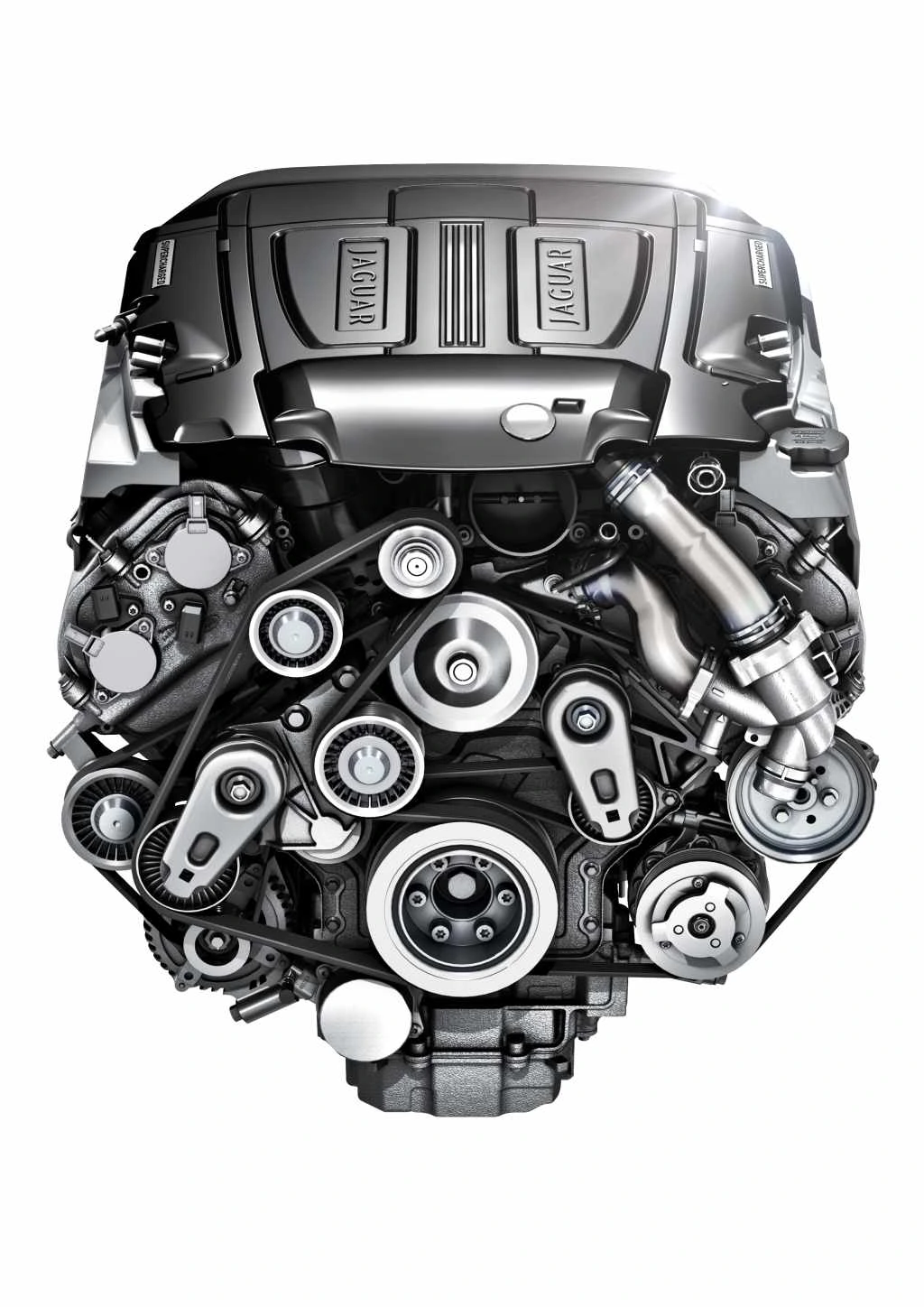
At the Beijing motor show on 23 April 2012, Jaguar announced a supercharged 3.0-litre V6 and a turbocharged 2.0-litre four-cylinder petrol engine for its expanding range. A North American announcement had appeared on 22 April. The engines were intended for 2013-model-year applications, but the announcement itself belongs to 2012.
The change was broader than adding two capacity badges. Jaguar was combining forced induction, direct injection and eight-speed automatic transmissions to replace some larger naturally aspirated petrol installations. The V6 also linked the saloon range to the forthcoming F-TYPE, although its output and application had to be distinguished carefully.
At a glance
- 3.0 V6 S/C: 2,995 cc; 340 PS/450 Nm for XF and XJ, with a 380 PS/460 Nm version announced for F-TYPE.
- 2.0 I4 turbo: 1,999 cc; 240 PS and 340 Nm.
- Both petrol engines were announced with eight-speed automatic transmissions.
- Intelligent Stop-Start accompanied the V6; the April release did not give the four-cylinder the same promise.
- Market availability and final vehicle-specific economy figures remained separate questions.
Two ways to increase the air charge
A supercharger and a turbocharger both help an engine take in more air than it would through natural aspiration alone. Their energy sources differ. The V6 used a mechanically driven compressor; the four-cylinder used an exhaust-driven turbine and compressor. Direct injection then delivered fuel into the combustion chambers rather than into the intake ports.
That common objective did not make the two engines variants of the same unit. They had different cylinder layouts, induction hardware, capacities and balancing arrangements. Their shared eight-speed transmission strategy was another part of the vehicle installation, not evidence that the engines were interchangeable.
The V6 drew on Jaguar’s V8 architecture
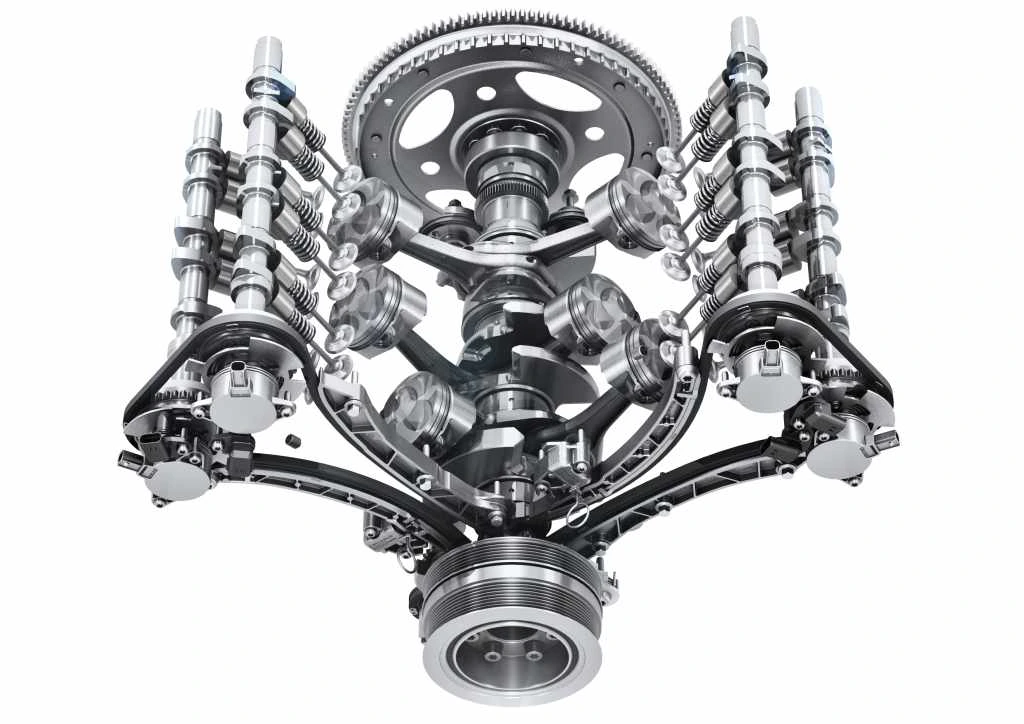
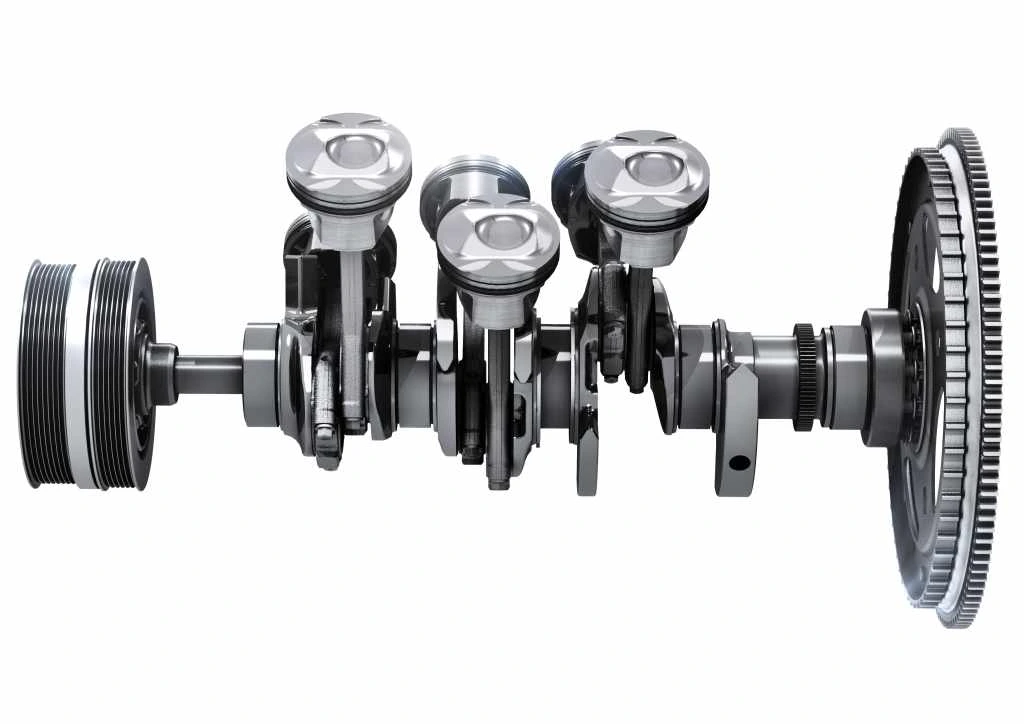
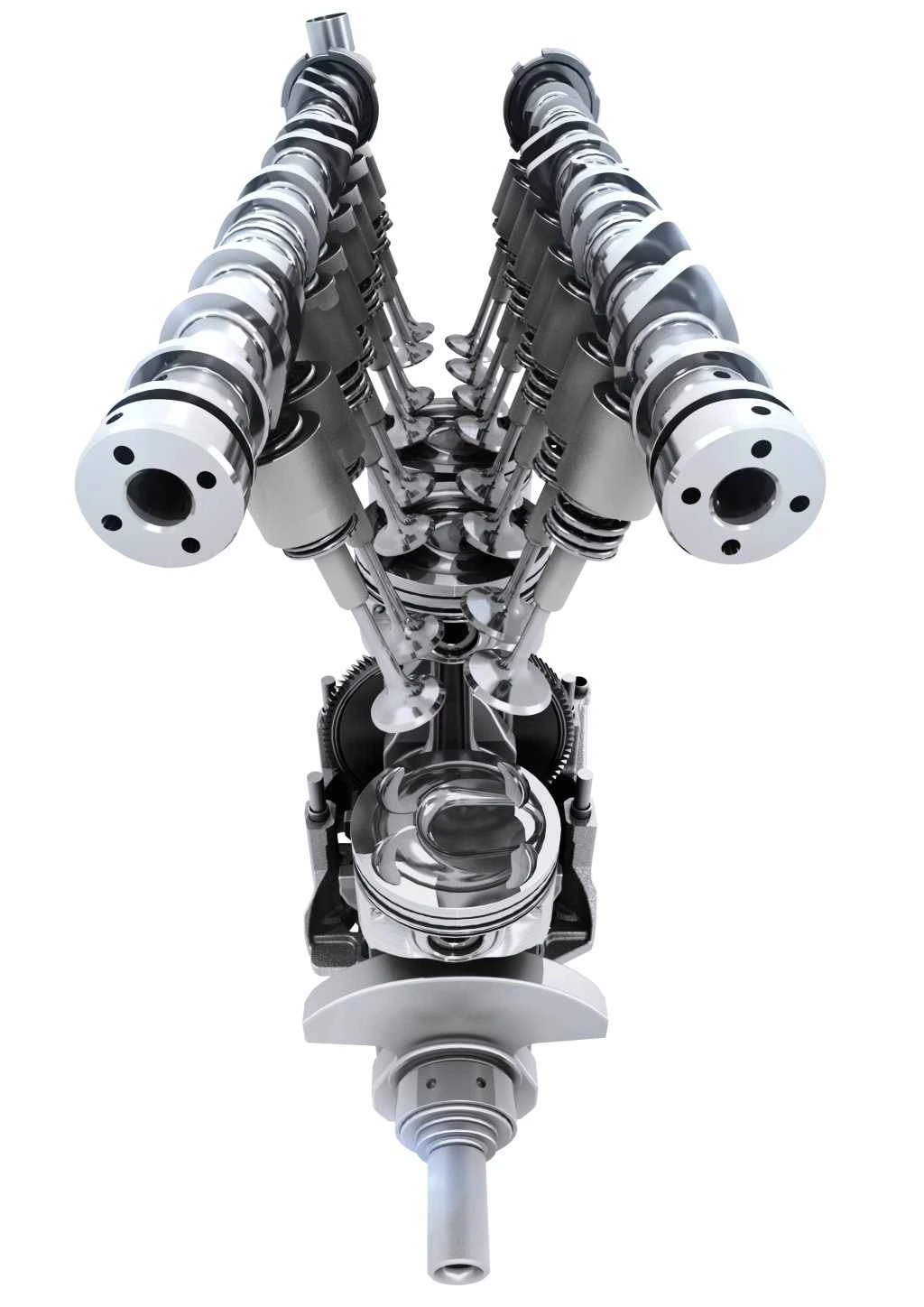
The new V6 used an aluminium block and four-valve cylinder heads, with four camshafts and independent control of intake and exhaust valve timing. Cross-bolted main-bearing caps contributed to rigidity. Jaguar also described counter-rotating front and rear balancing weights as part of its refinement measures.
Spray-guided direct injection operated at pressures of up to 150 bar. The launch material described multiple injections during a combustion cycle and carefully oriented spark plugs. A 10.5:1 compression ratio was quoted, higher than the 9.5:1 figure used there for comparison with the supercharged V8.
These details explain the development relationship with the larger engine without reducing the V6 to a slogan about having fewer cylinders. Its combustion system, valve timing, balancing and forced-induction controls all contributed to the finished package.
A supercharger inside the V
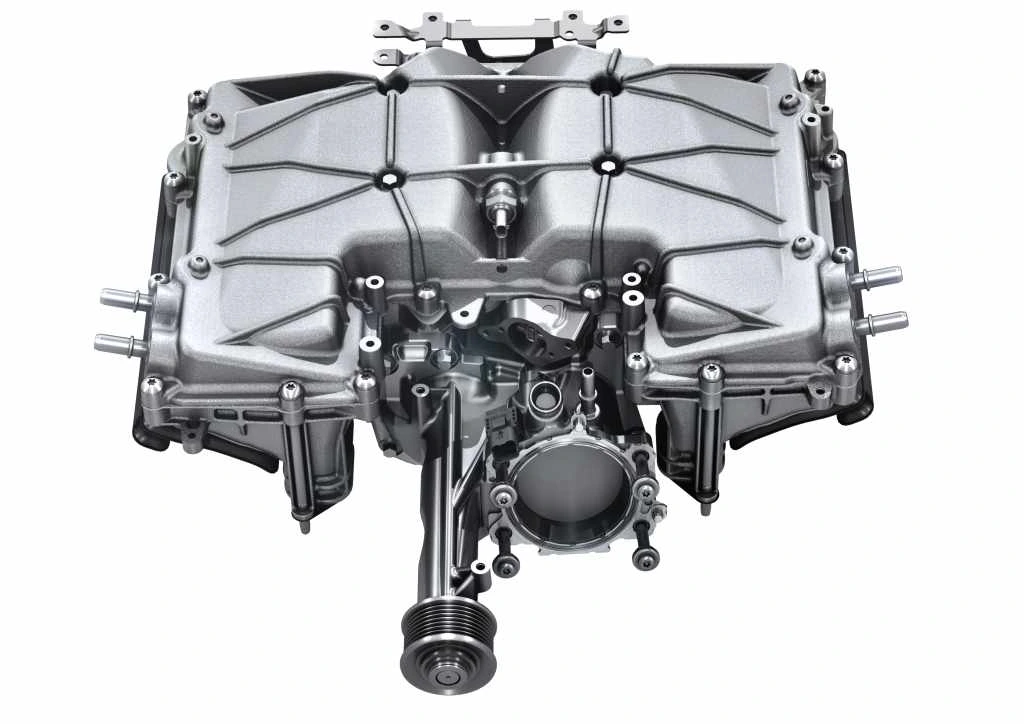
The V6’s Roots-type twin-vortex supercharger sat between the cylinder banks. A water-cooled intercooler lowered the intake-air temperature. Electronic supervision of boost and bypass operation was part of the Bosch engine-management strategy described at launch.
Jaguar announced 340 PS and 450 Nm for the saloons, and 380 PS and 460 Nm for the forthcoming F-TYPE. According to the April release, the higher-output version did not require altered hardware or ancillaries to achieve those figures: the differences were obtained through calibration of the supercharger bypass and throttle.
That statement described Jaguar’s factory programme. It does not establish that an owner can safely convert any engine or vehicle merely by writing a different file. A complete factory application also has its own approvals, control software and vehicle specification. The historical relationship between two ratings is not a retrofit instruction.
The four-cylinder took a different route
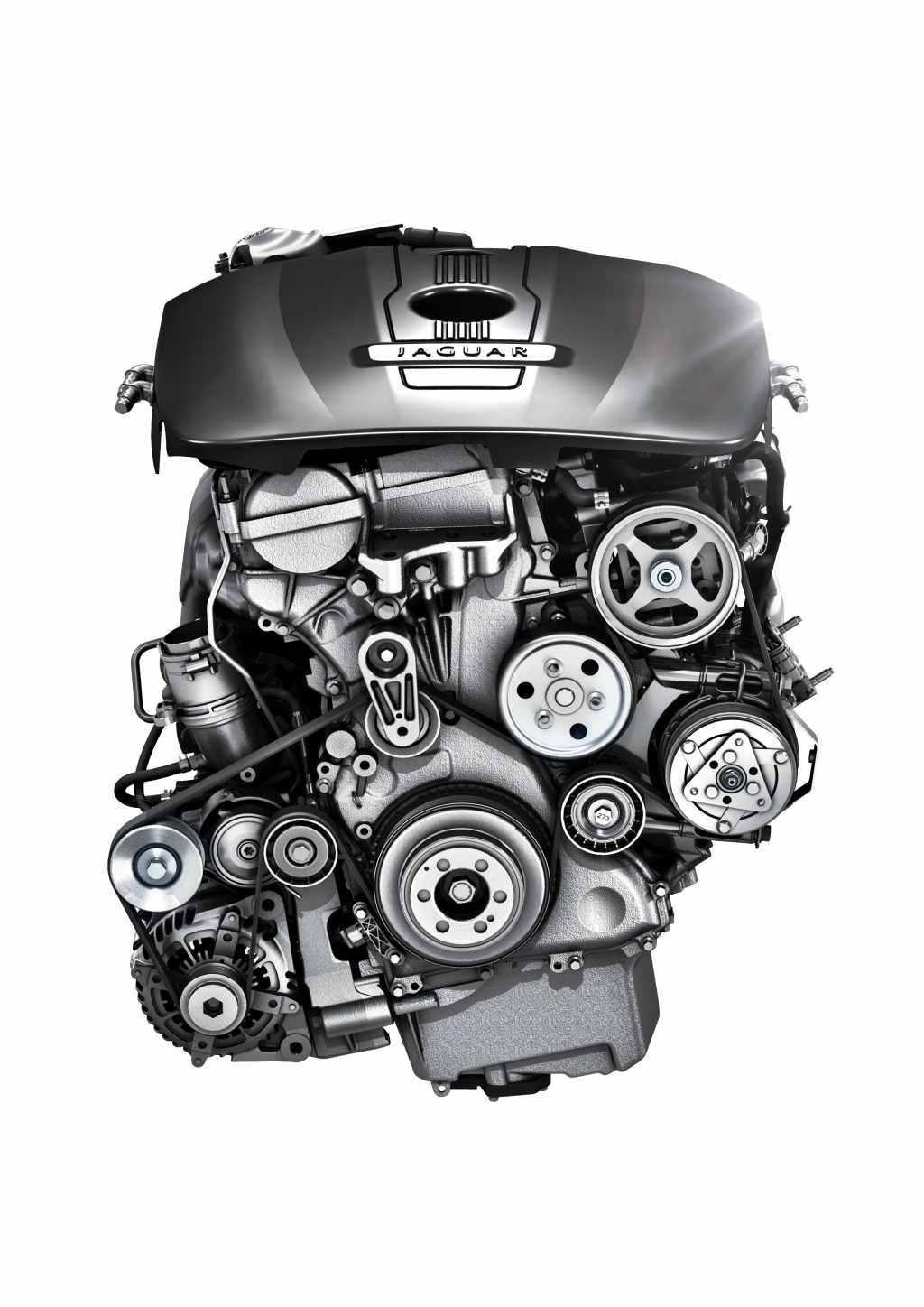
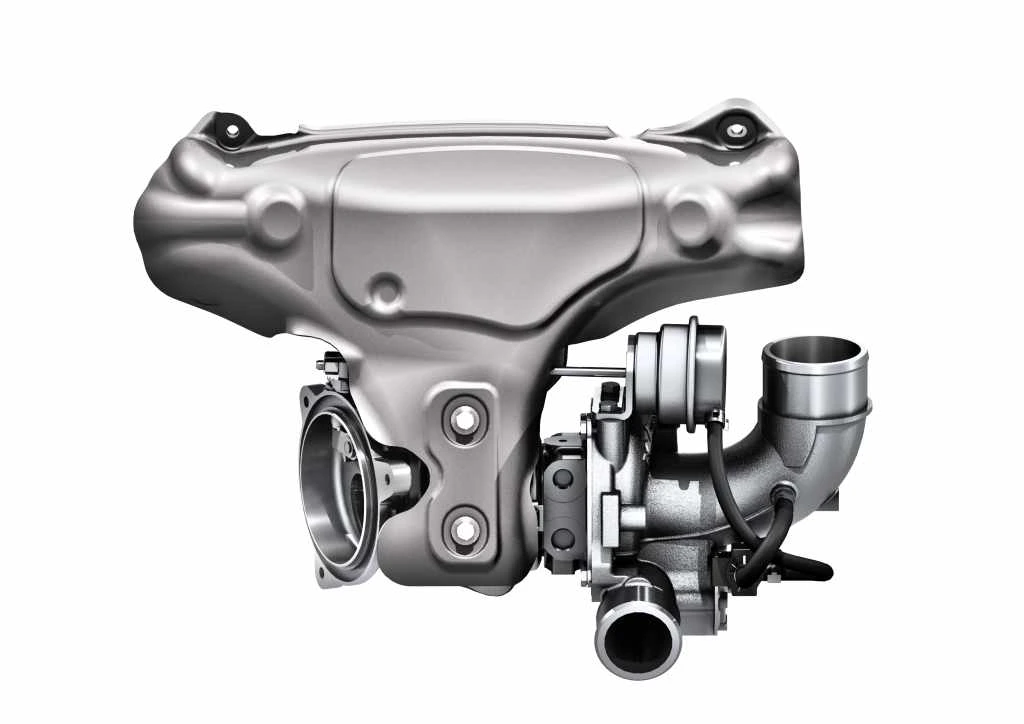
The 2.0-litre unit used a low-inertia turbocharger supplied through a lightweight, thin-wall exhaust manifold. Jaguar linked the manifold’s design to shorter warm-up time. Variable timing operated on both intake and exhaust camshafts, while direct injection and friction-reducing coatings formed part of the efficiency package.
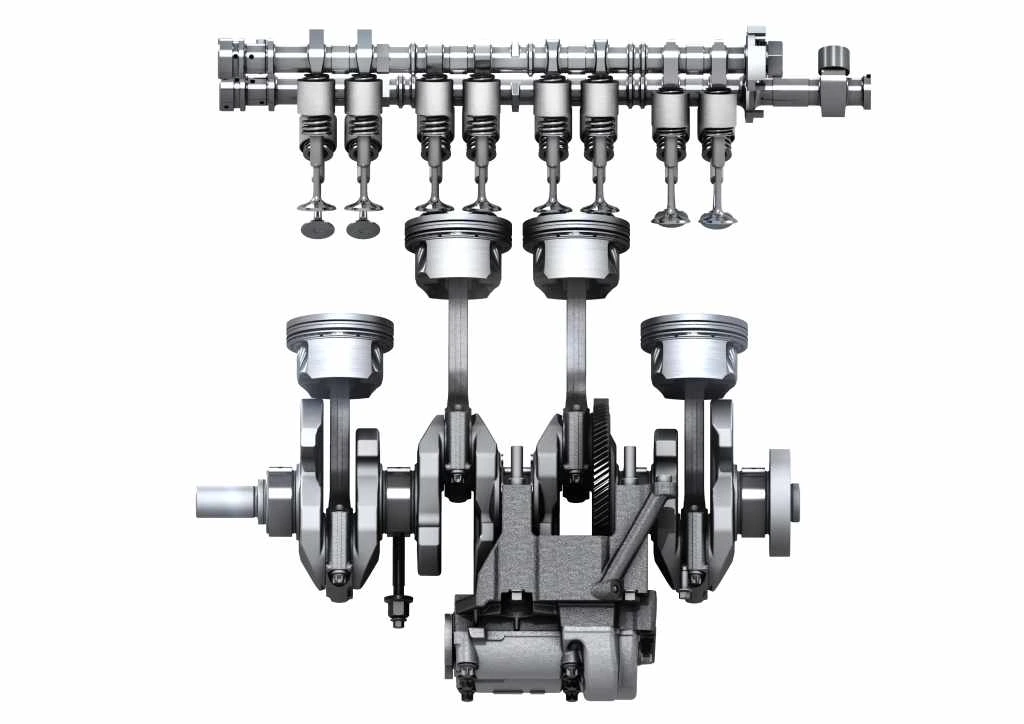
The announced output was 240 PS at 5,500 rpm, with 340 Nm between 2,000 and 4,000 rpm. The quoted as-shipped engine mass was 138 kg. Twin balancing shafts, active engine mounts, an acoustic cover and additional sound insulation addressed the refinement requirements of a Jaguar saloon.
For XF and XJ, the engine was installed longitudinally: its crankshaft ran along the length of the car. The orientation and its connection to the eight-speed transmission matter when interpreting photographs or discussing an application. Sharing an engine capacity with another vehicle does not identify an identical complete installation.
The figures need their units and applications
The table follows the international release’s PS figures. Contemporary British reports may express similar outputs in bhp, while North American releases use their own horsepower convention. Those labels should not be silently swapped. Capacity, torque and the relevant vehicle application help establish what is actually being compared.
The April acceleration figures were marked as manufacturer estimates, with F-TYPE performance not yet given in that announcement. Final economy and emissions data were to follow by model and market. There is therefore no reason to turn a provisional engine announcement into a universal performance claim for every XF or XJ.
| Announced engine | Power | Torque | Application stated in April |
|---|---|---|---|
| 2.0 I4 turbo, 1,999 cc | 240 PS at 5,500 rpm | 340 Nm at 2,000–4,000 rpm | XF/XJ in selected markets |
| 3.0 V6 S/C, 2,995 cc | 340 PS at 6,500 rpm | 450 Nm at 3,500–5,000 rpm | XF and XJ |
| 3.0 V6 S/C, 2,995 cc | 380 PS at 6,500 rpm | 460 Nm at 3,500–5,000 rpm | Forthcoming F-TYPE |
Eight speeds and the V6 Stop-Start system
Both new engines were announced with an eight-speed automatic transmission. A broad ratio spread allowed the transmission to combine lower gears for acceleration with taller ratios for cruising. That is the operating principle; the exact result in fuel consumption depended on the complete homologated vehicle.
The V6 was also offered with Intelligent Stop-Start. Jaguar described a twin-solenoid starter and control logic for situations in which the driver requested movement while the engine was still stopping. This was a coordinated starting and engine-management function, rather than just a different starter motor fitted in isolation.
The later announcement of XF and XJ model-year changes on 28 June 2012 set these engines within the wider range update. It also repeated that features and engines could arrive differently by market. The Beijing story establishes the engine technology; the individual model specification establishes what a particular car received.
What the announcement means for an existing car
For identification or an electronics enquiry, start with the exact engine, vehicle model, original market and component labels. A 3.0-litre Jaguar can be a petrol V6 or a diesel V6, and a capacity alone does not identify its management system. Likewise, a failure to start should not be assigned to Stop-Start merely because the vehicle has that feature.
Describe whether the ignition switches on, whether the engine cranks and what changed before the symptom began. The distinction between those stages is the starting point of ignition and starting diagnostics. This article explains the historical engineering announcement; it does not claim a universal repair or programming procedure.
Period technical illustrations presented in a new editorial layout. Component geometry is retained. Image licence.