LAND ROVER / CONCEPT TECHNOLOGY
DC100 in Delhi: the Defender concepts and their proposed technology
Two concepts explored different ways to carry the Defender identity forward, with driver assistance central to the proposal.
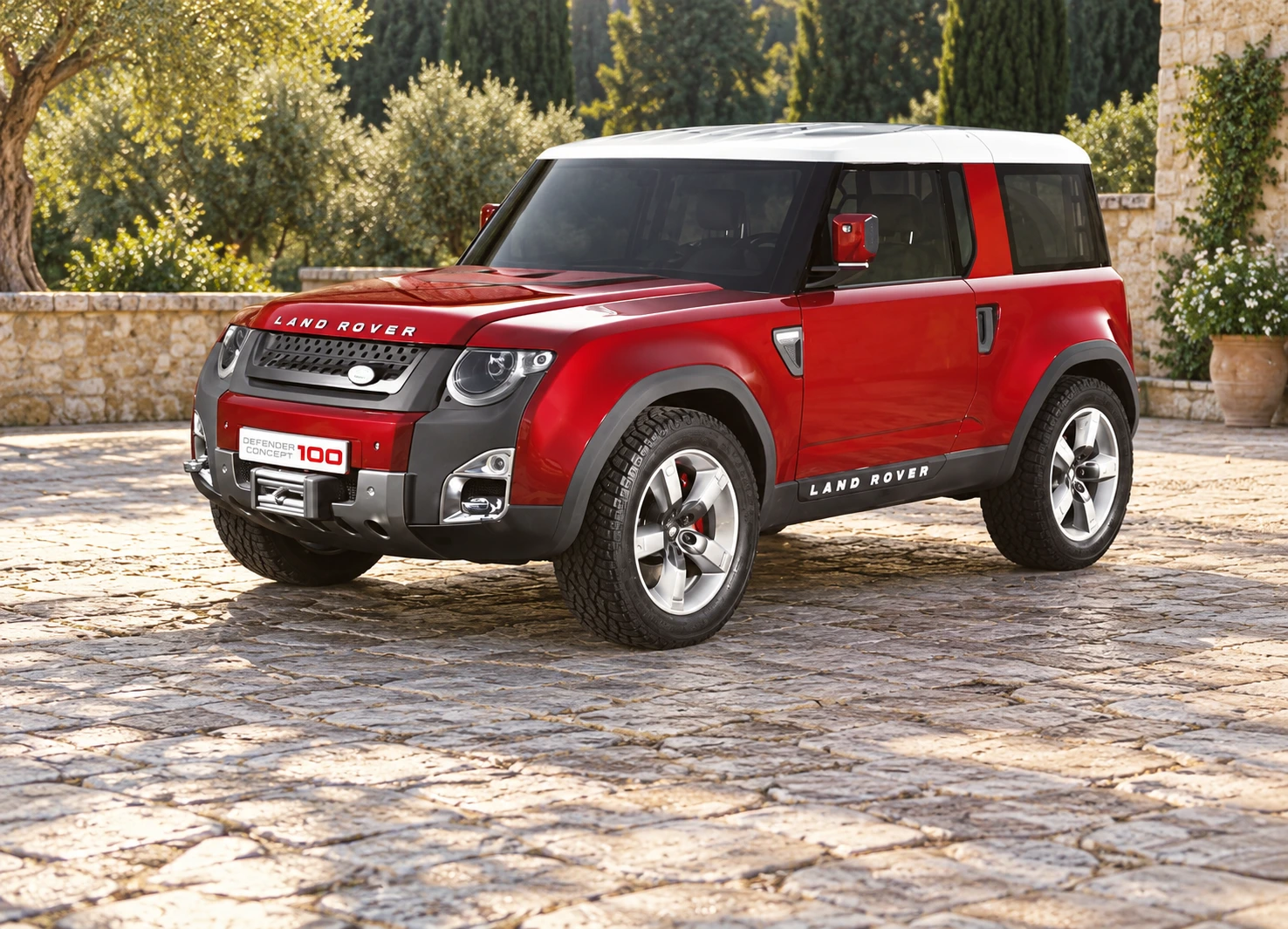
The Defender Concept 100 and Concept 100 Sport made their Indian debut at the New Delhi Auto Expo on 5 January 2012. Already shown in Frankfurt in September 2011, they appeared in Firenze Red with further presentation changes. Their role was to investigate a potential Defender direction rather than launch a production replacement.
At a glance
- Indian debut: 5 January 2012.
- DC100: closed body, red paint and white roof.
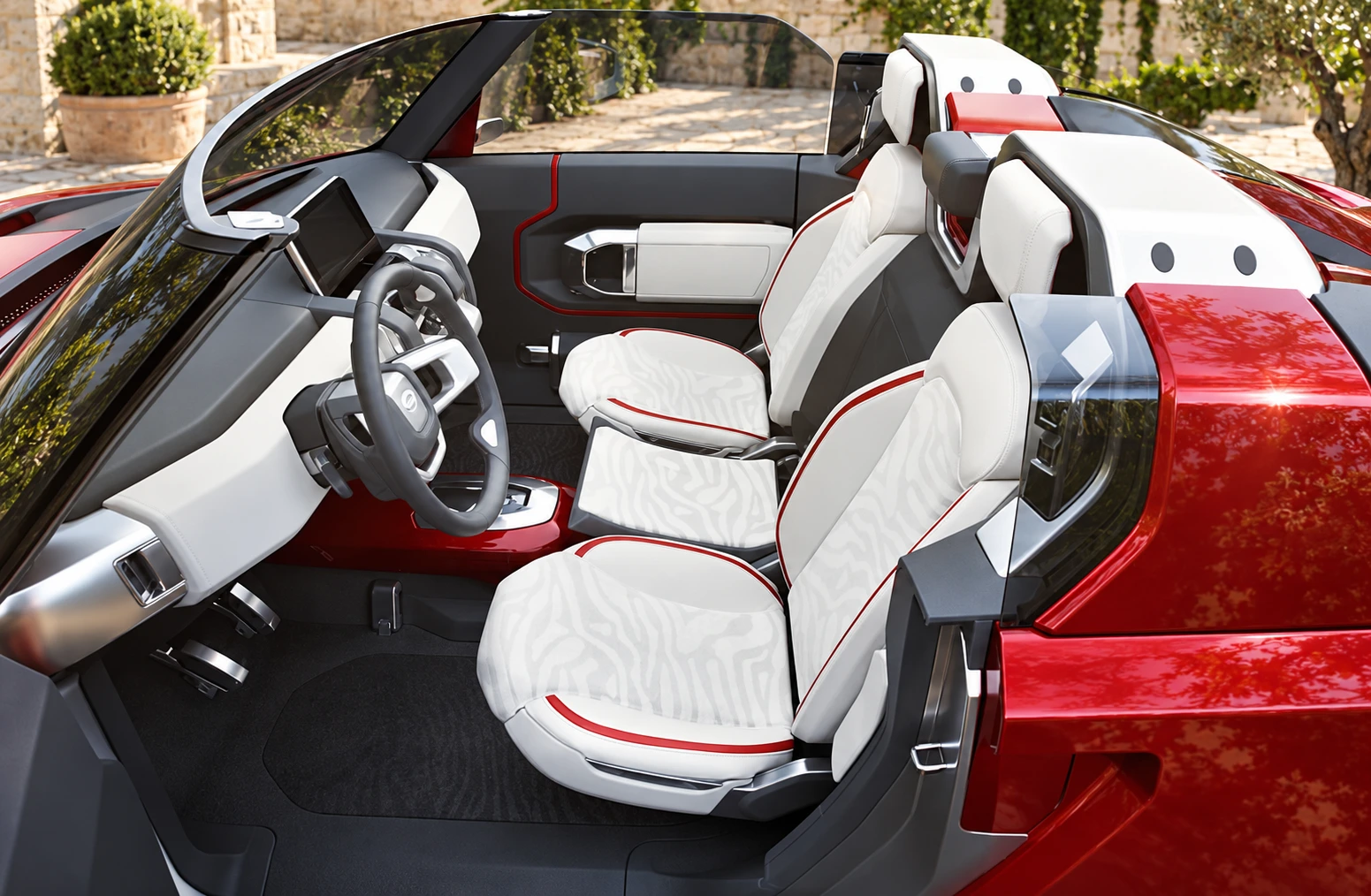
- DC100 Sport: open-top interpretation.
- Terrain-i, Wade Aid and Driveline Disconnect were described as concept technologies.
A recognisable theme in two different bodies
The closed DC100 combined short overhangs, upright glass and relatively vertical body panels with round lamps, a prominent grille and a winch. Land Rover showed it in Firenze Red with a white roof. The Sport used the same broad design language in an open-top body, drawing on the early Land Rover idea of a folding windscreen and exposure to the outdoors.
The January material described optimised off-road 20-inch wheels with Cooper all-terrain tyres. The two bodies demonstrated a possible breadth of use, rather than two confirmed versions available to order.

Terrain Response and Terrain-i had different jobs
The proposed next-generation Terrain Response would choose vehicle settings for the surface without the driver first selecting a programme. Terrain-i addressed another part of the task: representing the ground ahead as a three-dimensional topographic view.
Land Rover described Terrain-i as identifying possible hazards and suggesting another route, with pedestrian and hazard recognition also envisaged for urban use. Those were concept capabilities in the announcement. An ordinary navigation screen in a production vehicle should not be treated as proof of the same sensing function.
Wade Aid brought sensing and preparation together
The Wade Aid proposal used sonar sensors in the bumpers and door mirrors to assess water depth. The announcement linked that information to changes in the vehicle: closing body vents, increasing ride height, selecting a low gear and advising a suitable speed.
This went beyond simply displaying a depth reading. It described a coordinated concept for preparing the vehicle and advising its driver. It did not establish a safe wading depth for a production Defender or remove the need to assess conditions.
Efficiency ideas included a physically disconnecting driveline
A Twin-Solenoid Stop/Start system and eight-speed automatic were described with future hybridisation in mind. Driveline Disconnect would use the front axle alone when conditions allowed, physically decoupling the rear axle to reduce losses and restoring drive when required.
These proposals belonged to the concept programme. They should not be written as equipment already installed across the contemporary Defender range.
| Concept function | Purpose described in January |
|---|---|
| Automatic Terrain Response | Adapt settings without driver programme selection |
| Terrain-i | Represent terrain and identify hazards ahead |
| Wade Aid | Assess depth and coordinate preparation/advice |
| Driveline Disconnect | Decouple the rear axle when drive was unnecessary |
A design investigation, with timing still an intention
At Delhi, Land Rover spoke of a replacement intended for the middle of the decade and acknowledged that much work remained. That statement was a development intention at the time. The DC100 display did not itself confirm the eventual production body or every feature of the future model.
Its value in the 2012 record is therefore specific: a regional debut with evolved presentation, and a clear account of the assistance and efficiency ideas being explored for Defender’s future.
Illustrations recomposed from period press imagery. Image licence.