DISCOVERY / MODEL DEVELOPMENT
Discovery 4: Black Design Packs and a more useful navigation system
Black exterior details attracted attention, but the October update also changed how the Discovery displayed information and handled navigation.
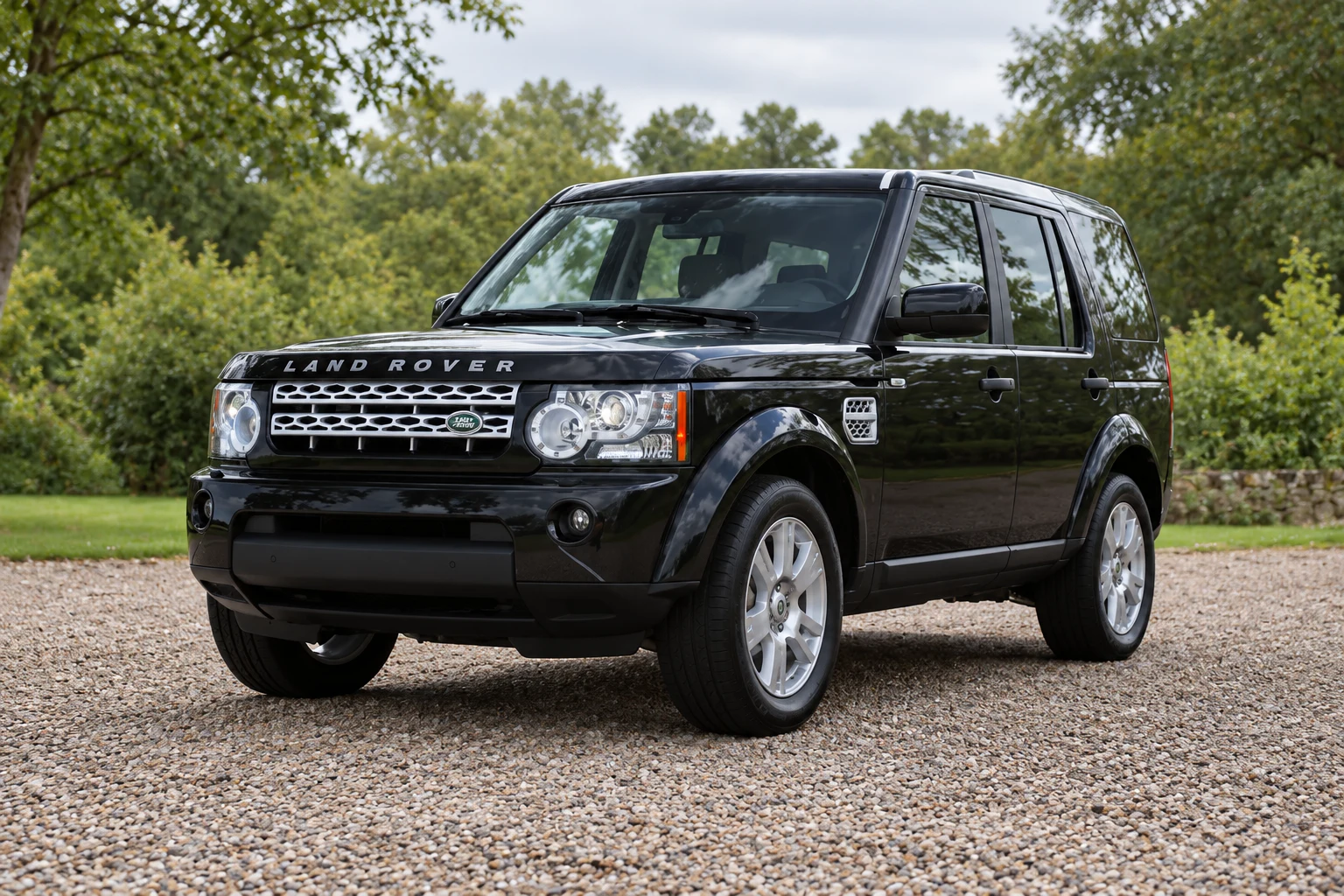
Land Rover announced its next Discovery 4 model-year update on 1 October 2012. The most visible option was the Black Design Pack, offered with two wheel sizes and a coordinated collection of dark exterior details. Inside, the changes reached beyond upholstery: navigation gained more useful off-road and route-planning functions, while the entertainment system adopted additional digital broadcast formats.
These were developments of the existing Discovery 4, rather than a new generation. The announcement described equipment for the forthcoming model year; that designation should not obscure the actual event date. Nor should the range-wide press material be read as a promise that every market, trim level or individual vehicle received every feature.
At a glance
- Announcement: 1 October 2012.
- Black Design Packs offered 19-inch or 20-inch black wheels.
- Extended Leather Pack became an HSE option with Windsor leather seats.
- Navigation, where fitted, moved to the Premium system with 4x4i and off-road guidance.
- Diesel and petrol versions retained different gearbox combinations, depending on market.
What the Black Design Pack actually changed
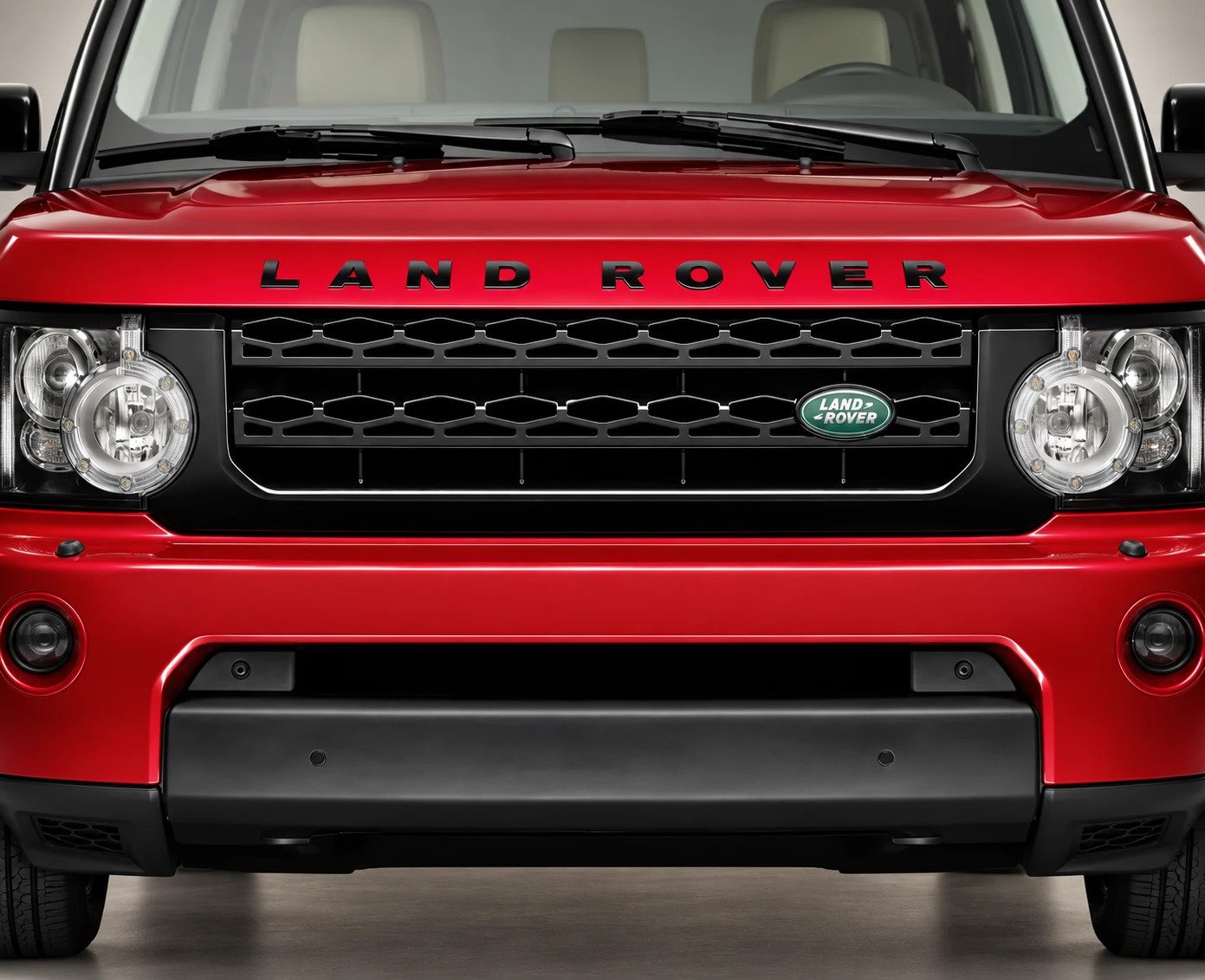
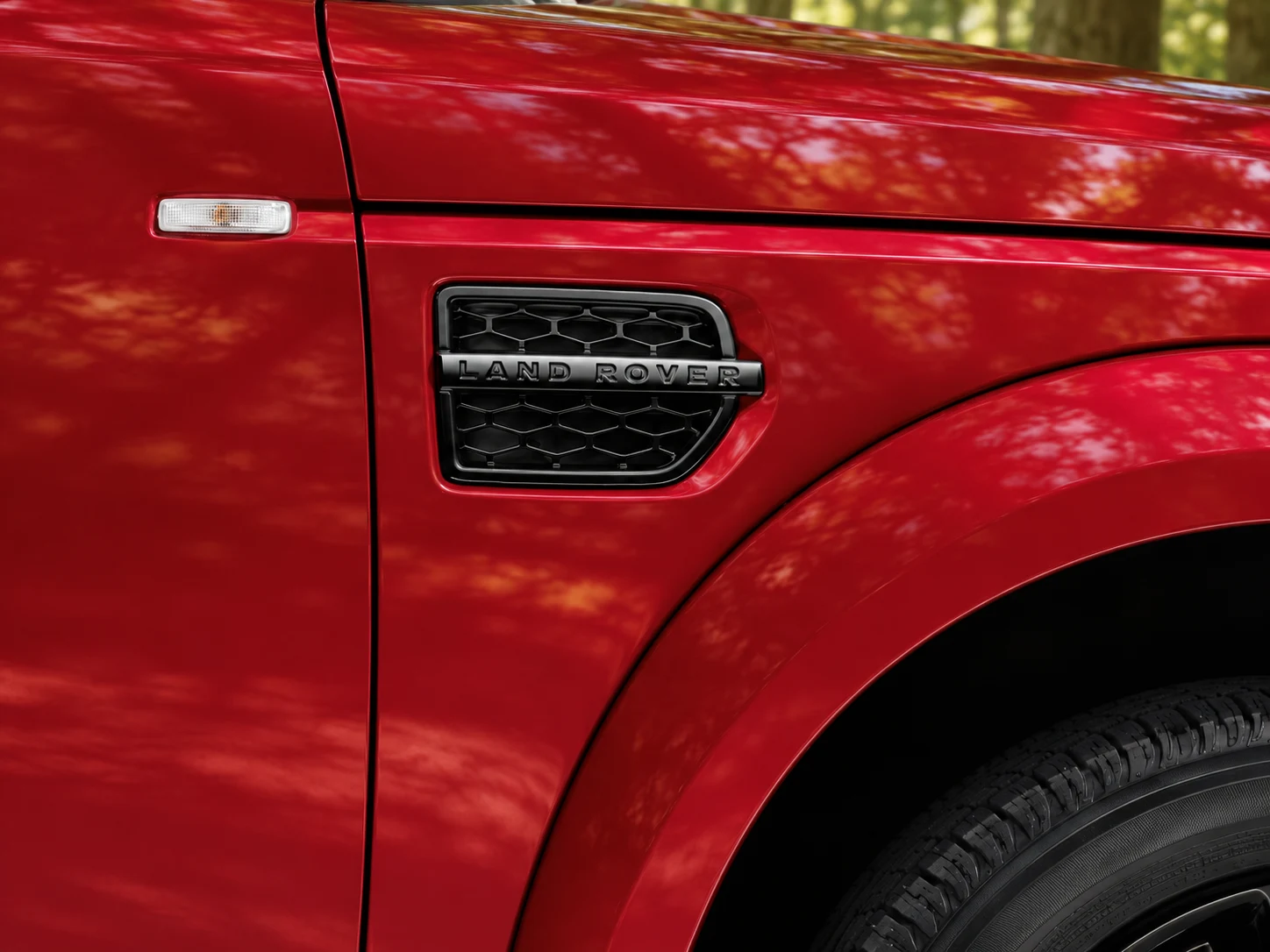
The package coordinated the Discovery’s existing shapes rather than replacing its bodywork. The grille and wing vents received gloss-black finishes, along with the door handles, mirror caps and LAND ROVER and DISCOVERY 4 lettering. Extended roof rails used satin black. These distinctions matter when identifying a period vehicle: a black grille alone does not establish that the complete factory package is present.
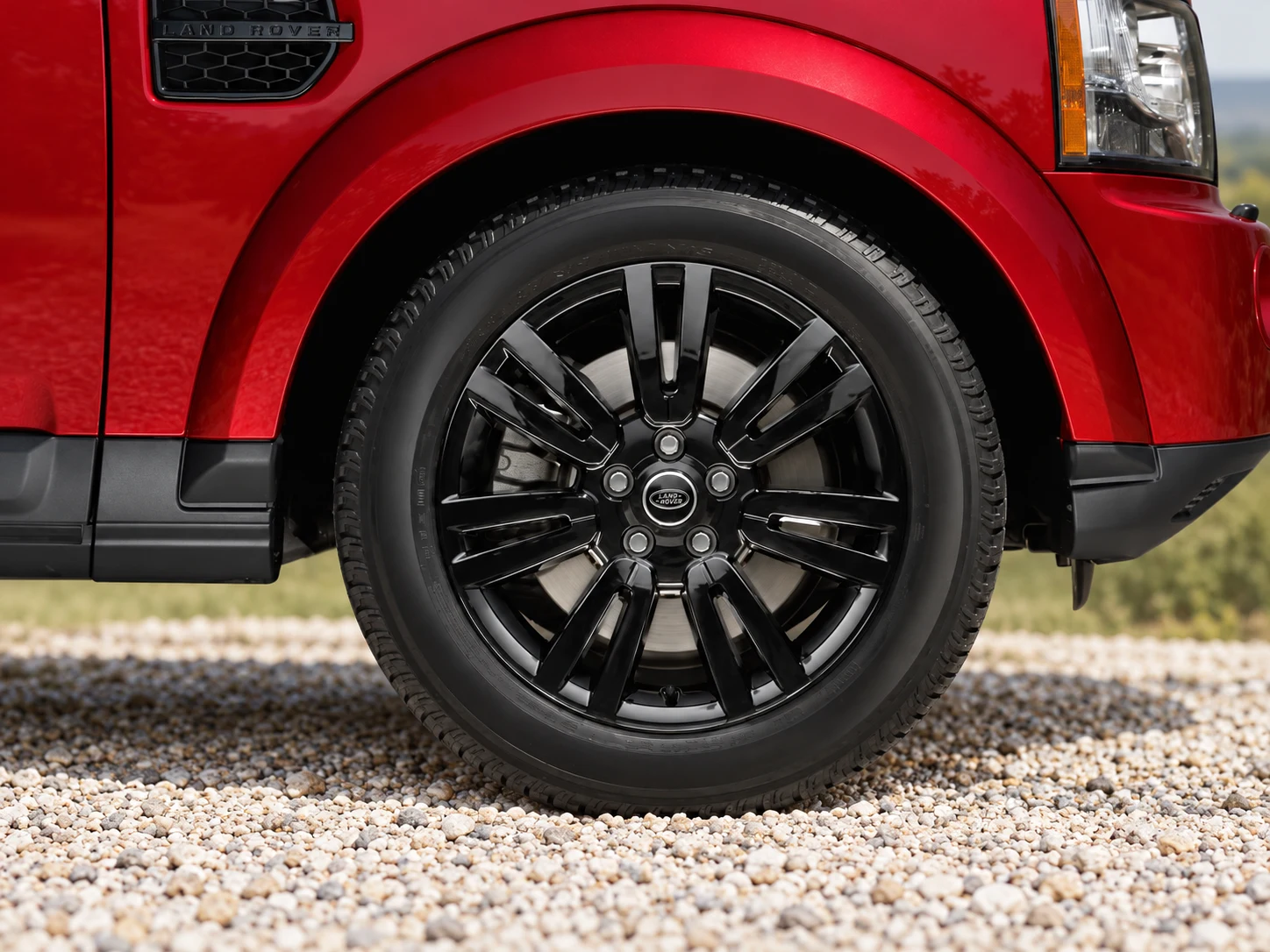
Customers could specify 19-inch seven-split-spoke wheels or 20-inch five-spoke wheels, both painted black. The larger number was therefore not a universal specification. A standard vehicle in the same announcement could retain bright wheels and exterior detailing, so contemporary press photographs show more than one appearance.
More choice in paint and interior materials
Five additional paint choices were listed: Havana, Barolo Black, Barossa, Mariana Black and Causeway Grey. HSE also gained a bright-silver 19-inch seven-spoke wheel option. These additions broadened the specification choices without changing the Discovery’s underlying body or seating concept.
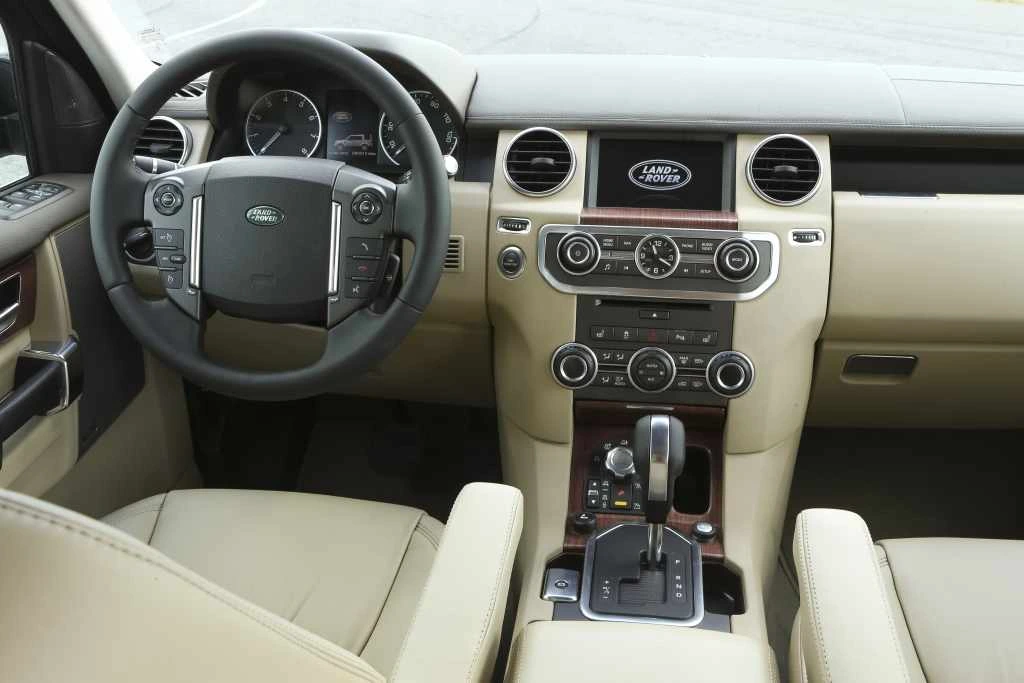
The interior palette added Arabica Windsor leather with Nutmeg stitching and Ivory Windsor leather with matching Ivory stitching. Grand Ivory Lacquer veneer offered a different contrast against Ebony dashboard and door casings. Other changes included Cosmic Grey trim and gloss-black steering-wheel switch finishers associated with Grand Black Lacquer.
The Extended Leather Pack developed an idea used on the earlier HSE Luxury Limited Edition. For HSE vehicles with Windsor seats, soft leather and twin-stitched detailing could extend over the upper dashboard, upper doors and instrument binnacle. It was an option with a defined specification, rather than evidence that all Discovery 4 dashboards became leather-covered.
Premium navigation: information beyond a road map
Land Rover had previously offered Base and Premium navigation. For this update, the available factory navigation became the Premium system. “Available” is important: the announcement explicitly qualified the equipment as applying where navigation was fitted.
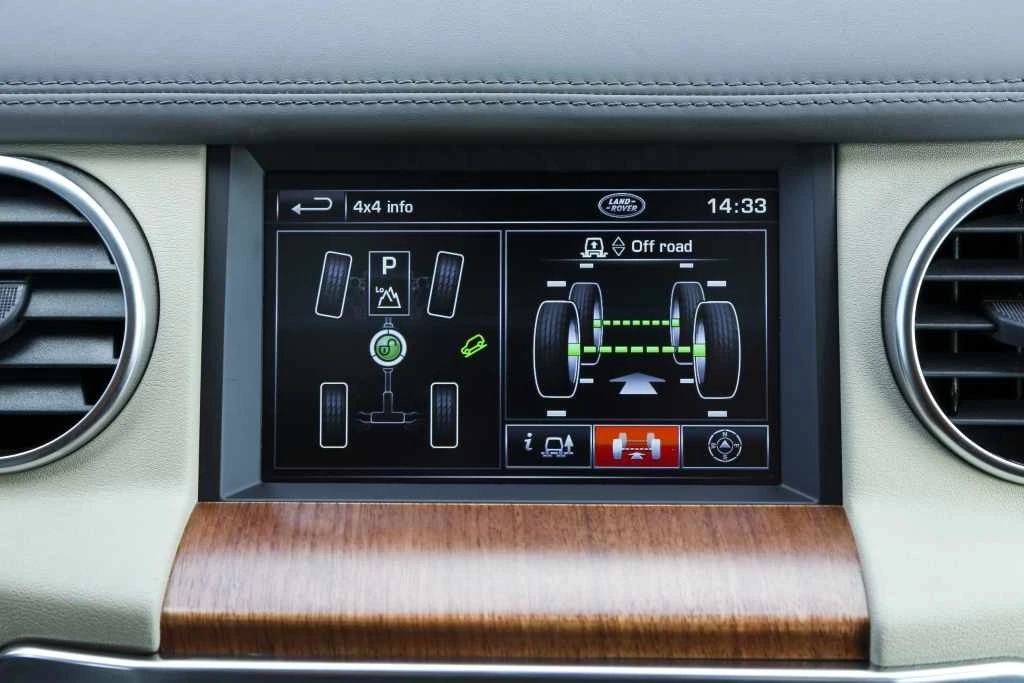
The system brought together traffic information through TMC, voice operation, off-road guidance and the 4x4i vehicle-status display. The latter could illustrate wheel articulation and other vehicle information. Such graphics helped the driver understand the vehicle’s condition; they did not replace judgement about traction, clearance or a safe route.
Personalisation also became more practical. A My POI category accepted points of interest from a USB stick in GPX format, with names, icons and audible warnings. Avoid Points, accessed from Stored Locations, could be used in route planning. These were navigation functions, not a modern online app ecosystem or a claim of continuous cloud connectivity.
A clearer route-planning interface
The navigation interface gained shortcuts to reduce the steps involved in choosing a destination. Where a search yielded a single destination, a GO button replaced an unnecessary intermediate list. Split-screen junction views reproduced motorway signs more clearly, while Map Auto Zoom could enlarge junctions as the vehicle approached.
The announcement also added Arabic input and display support, and Russian voice control including Say What You See. Language support therefore formed part of the equipment update, although the available combinations still depended on the relevant market specification. The historical announcement does not establish which map database or language package remains installed in a particular used vehicle today.
The electronics architecture had its own timeline
The audio system had already moved to MOST Generation 2.1 for the 2012 model year. The October announcement described its next development: DAB+ and DMB-A broadcast support and a digital television tuner capable of receiving MPEG4 streams. It would be inaccurate to present the underlying MOST upgrade itself as an entirely new October invention.
The audio hierarchy included an eight-speaker entry system, an 11-speaker 380W Harman Kardon system and the 17-speaker 825W Harman Kardon LOGIC 7 arrangement. Touchscreen availability was independent of navigation. A touchscreen therefore does not, by itself, prove that the vehicle has the complete navigation specification.
Rear-seat entertainment used a DVD drive in the audio head unit, wireless headphones and a remote control, with support for games-console connections and MP4 playback from USB. These capabilities belonged to the period system and its supported formats. They should not be confused with later smartphone integration.
For an electronics enquiry, the actual fitted equipment and module identities matter more than an advertisement’s trim label. Our communication diagnostics page explains the relevant service context without implying that a historical equipment announcement diagnoses a present fault.
Engines and gearboxes remained market dependent
The release retained the 3.0-litre diesel engines in 211PS TDV6 and 256PS SDV6 forms, paired with the ZF 8HP70 eight-speed automatic in the stated EU5 specification. The naturally aspirated 5.0-litre V8 petrol engine produced 375PS and used the ZF 6HP28 six-speed automatic. Those are different combinations, rather than one gearbox specification for every Discovery.
The wider package catalogue also remained distinct from the new Black Design option. Technology Pack included Premium Navigation, voice activation and front/rear parking aids. HSE Luxury Pack and Vision Assist Pack combined different comfort, lighting and camera equipment. Their presence must be checked individually; the press release did not make them universal standard equipment.
| Powertrain in the announcement | Output | Transmission |
|---|---|---|
| 3.0 TDV6 diesel, specified EU5 markets | 211PS | ZF 8HP70, eight-speed automatic |
| 3.0 SDV6 diesel, specified EU5 markets | 256PS | ZF 8HP70, eight-speed automatic |
| 5.0 naturally aspirated V8 petrol, selected markets | 375PS | ZF 6HP28, six-speed automatic |
A simpler specification returned in selected markets
The longer period press material also described the return of coil-spring suspension in selected markets on the entry-level 211PS 3.0-litre version. This derivative used 18-inch wheels and five seats. Crucially, it did not have Terrain Response and therefore used a different switch assembly.
That makes a blanket description of every contemporary Discovery 4 as an air-sprung seven-seater inaccurate. The same update could support both highly specified luxury versions and a simpler market-specific derivative. The local specification remains decisive.
A useful distinction when reading the model’s history
The October update combined appearance, material choices and software-facing convenience. Its significance lies in that combination: the Discovery remained recognisably the same vehicle, while buyers gained more ways to specify its cabin and use its information systems.
For a surviving car, the useful questions are concrete: which engine and transmission were fitted, which audio and navigation hardware is present, and which factory options were ordered? The model-year badge is a starting point. The actual build specification provides the detail.
Exterior illustrations recomposed from period press imagery. Cabin and 4x4i screen retain their original technical details. Image licence.