JAGUAR / PERFORMANCE ENGINEERING
Jaguar XFR-S: the saloon developed around 550PS and 300km/h
Jaguar’s November reveal brought together engine airflow, stronger driveline parts, wider tyres and revised electronic controls.
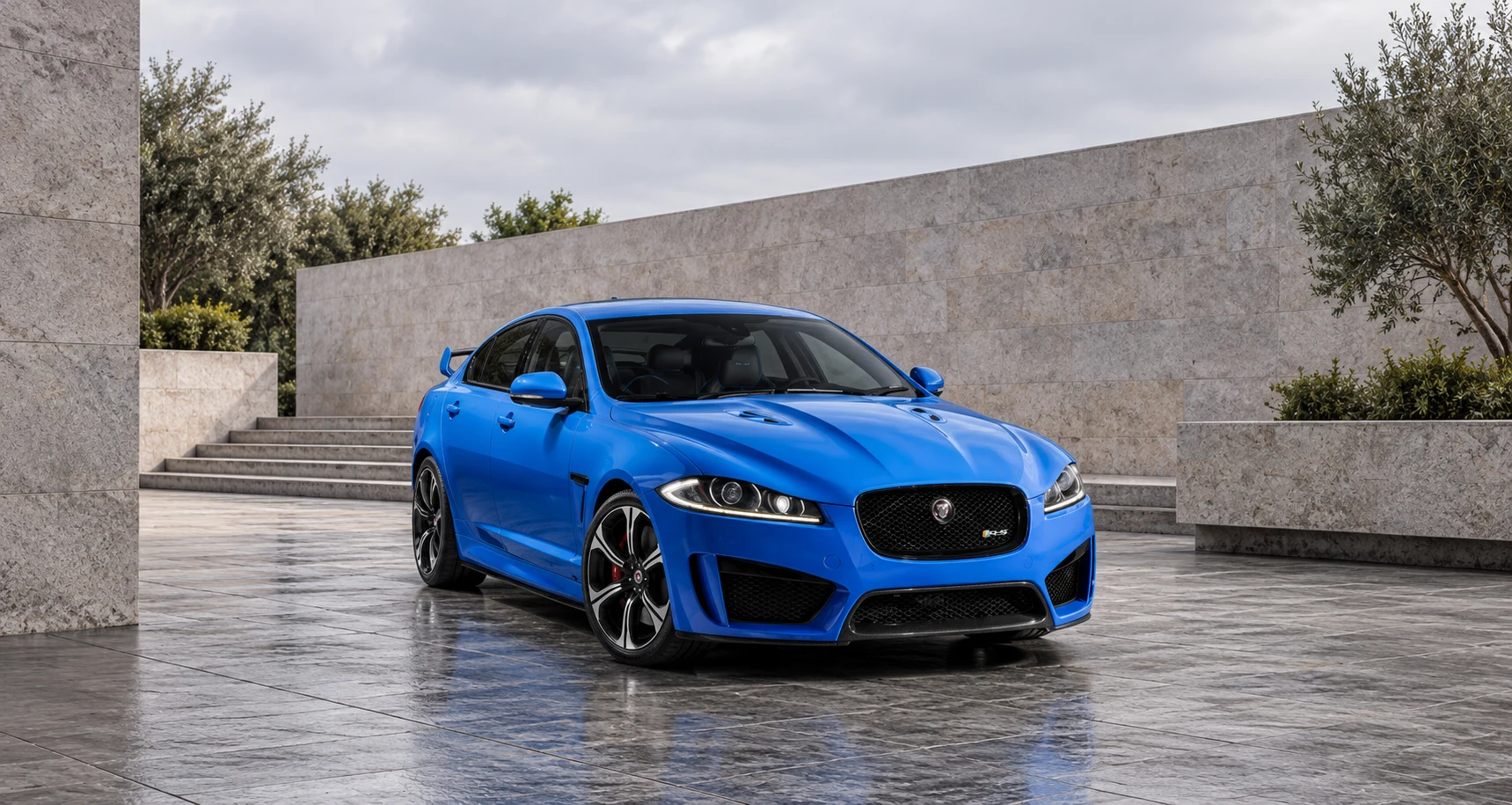
Jaguar unveiled the XFR-S at the Los Angeles Auto Show on 28 November 2012. Developed by the company’s specialist ETO division, it became the second model in the R-S performance family after XKR-S. The launch specification gave the XF saloon a 550PS supercharged V8, 680Nm and an electronically limited maximum of 300km/h.
This was a separate development from the earlier XFR Speed Pack. The XFR-S changed engine output, driveline hardware, suspension and aerodynamics together. The technical programme also drew on work from XKR-S and the newly revealed F-Type, although the car retained its own four-door body and rotary transmission selector.
At a glance
- Global reveal: Los Angeles, 28 November 2012.
- 5.0-litre supercharged V8: 550PS and 680Nm.
- Eight-speed automatic with Quickshift and Intelligent Stop/Start.
- Published 0–100km/h: 4.6 seconds; maximum: 300km/h.
- Lateral suspension stiffness and spring rates increased by 30% in the launch comparison.
- Carbon-fibre aerodynamic parts contributed to a quoted 68% reduction in overall lift.
A distinct step beyond XFR and Speed Pack
The standard XFR supplied the starting point, but Jaguar’s engineers approached the XFR-S as a coordinated vehicle programme. The power increase was 40PS and the torque increase 55Nm relative to the quoted XFR installation. Engine management, intake and exhaust flow were all involved.
The XFR Speed Pack had kept the 510PS output while raising its speed limit to 280km/h. XFR-S instead combined higher output with a 300km/h limit and more extensive hardware changes. Similar names and a visible rear wing do not make the two specifications interchangeable.
| Launch specification | XFR Speed Pack | XFR-S |
|---|---|---|
| Published output | 510PS | 550PS |
| Electronic maximum | 280km/h | 300km/h |
| Core approach | Calibration and aerodynamic package | Powertrain, chassis, controls and body development |
| 2012 milestone | June announcement; August show debut | 28 November global reveal |
The V8 used airflow as well as calibration
The all-aluminium, four-cam 5.0-litre engine combined spray-guided direct injection and independently variable cam timing. A Roots-type twin-vortex supercharger sat between the cylinder banks, with two intercoolers using their own water circuit to reduce charge-air temperature.
Larger lower front intakes admitted more air, while engine-management changes helped release the additional output. The launch specification quoted peak power at 6,500rpm and the 680Nm torque plateau from 2,500 to 5,500rpm. This was a broad operating range, rather than a single maximum-speed number.
The exhaust was also revised. An X-piece replaced the central silencer and the rear pipes followed a more direct route. A sound symposer carried more induction sound into the cabin. These were described as part of the production engineering and acoustic programme; the figures here are Jaguar’s launch data.
Greater output brought stronger driveline parts
The detailed press material named uprated driveshafts, a larger central bearing on the propshaft and a new torque converter. Their purpose was to accommodate the increased output and make the driveline’s responses more immediate.
That list is significant because it extends the story beyond an engine-control change. A software file alone does not reproduce the complete factory configuration when the supporting mechanical assemblies also differ. For a replacement-module enquiry, the original part and software identities should be retained; our module-information guide explains what to record.
Quickshift coordinated transmission and engine torque
The eight-speed automatic used Quickshift technology developed for the F-Type. During manually requested upshifts through the steering-wheel paddles, precisely timed engine-torque intervention helped the transmission deliver the intended rapid change.
Downshifts, whether selected manually or in Sport, used an engine-speed increase to match the lower ratio. The control strategy also supported multiple downshifts during hard braking. In automatic operation it interpreted acceleration, braking, cornering forces, pedal use and road load to adapt shift behaviour.
Corner Recognition could retain the appropriate gear through a bend. During repeated overtaking demands the transmission could hold a lower ratio ready for another acceleration request. These functions show why engine and gearbox calibration have to operate as a system rather than as independent settings.
Intelligent Stop/Start remained part of the package
The launch XFR-S included Intelligent Stop/Start. The twin-solenoid starter arrangement supported a restart even while the engine was still running down if the driver changed intention before the stop had completed.
Jaguar quoted an EU combined figure of 11.6l/100km and CO₂ emissions of 270g/km in the technical table. The release described the higher engine output as having no adverse impact on the comparable consumption and emissions figures. These are period manufacturer results, with their original test context, rather than a forecast for an individual car today.
Suspension changes were both structural and adjustable
Jaguar quoted a 30% increase in overall lateral suspension stiffness at both ends, and the same proportional increase in front and rear spring rates. Front suspension knuckles were revised using development knowledge from XKR-S, with new wheel bearings contributing to the steering and handling programme.
At the rear, a new subframe supported revised geometry. Stiffer bushes and new rear knuckles worked with the firmer springs. The steering system also used valving developed for F-Type. The press material therefore described physical mounting and geometry work as well as different electronic settings.
Those percentages apply to the specified suspension measures. They are not a claim that the whole body became 30% stiffer in every direction, nor that every component increased by the same amount.
Wider forged wheels and bespoke tyres
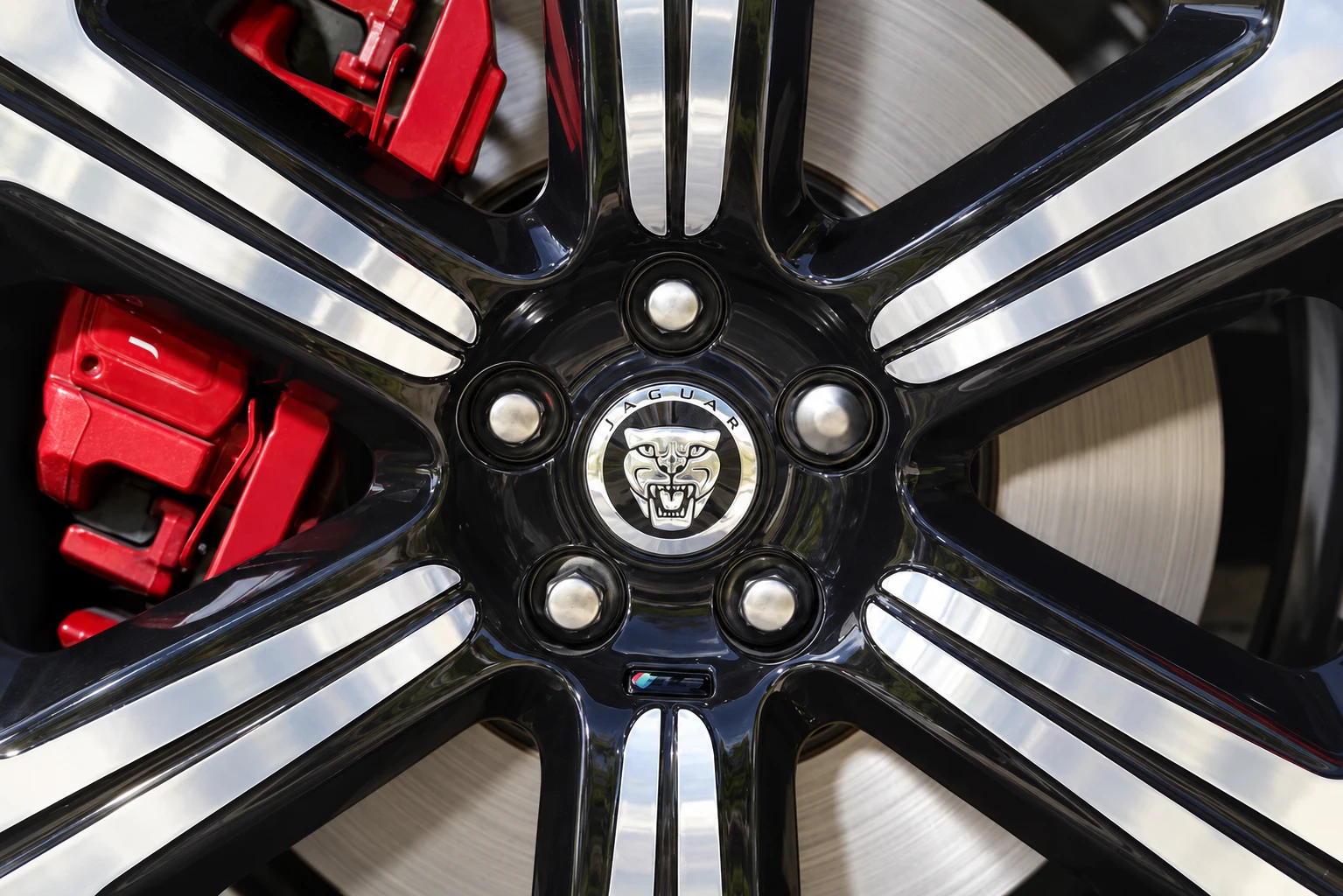
The 20-inch forged Varuna wheels were half an inch wider at the front and one inch wider at the rear than the XFR comparison wheels. Jaguar said the forged construction avoided a weight penalty despite the increased width.
Pirelli developed tyres for the XFR-S in 265/35 front and 295/30 rear sizes. The release described the different changes in rim and tyre width as a way of pre-loading the sidewall to influence response. The wheel, tyre and suspension choices were presented as one development package.
The six-spoke wheel design is also an important visual identifier. A generic XF wheel or the Speed Pack car’s wheel is not an exact illustration of the Varuna installation.
Adaptive Dynamics, active differential and DSC were retuned together
Adaptive Dynamics used continuously variable dampers to manage vertical body motion, pitch and roll. The system could adjust damping up to 500 times per second in response to driver inputs and road conditions. Selecting Dynamic mode moved the available control towards firmer damping.
The active electronic differential was recalibrated to use the additional rear grip, revised suspension control and higher engine output. Working alongside it, the Trac DSC setting changed the stability-control behaviour available to the driver.
This is the part of the story in which chassis electronics become especially relevant: the tyre contact, damper response, axle locking and stability strategy were developed together. A replacement control module needs the appropriate vehicle configuration; a matching connector alone cannot establish it.
Brake cooling accompanied the performance increase
The High Performance Braking System used internally ventilated 380mm front and 376mm rear discs. The XFR-S gained additional underbody air channelling to support cooling during repeated use.
These are the launch car’s documented disc sizes. Its visual performance package should not be used to assume the presence of a later or different optional braking system. The red calipers and large wheels form part of the period appearance, while the actual vehicle specification remains the reference for parts identification.
Aerodynamics explained the more assertive body
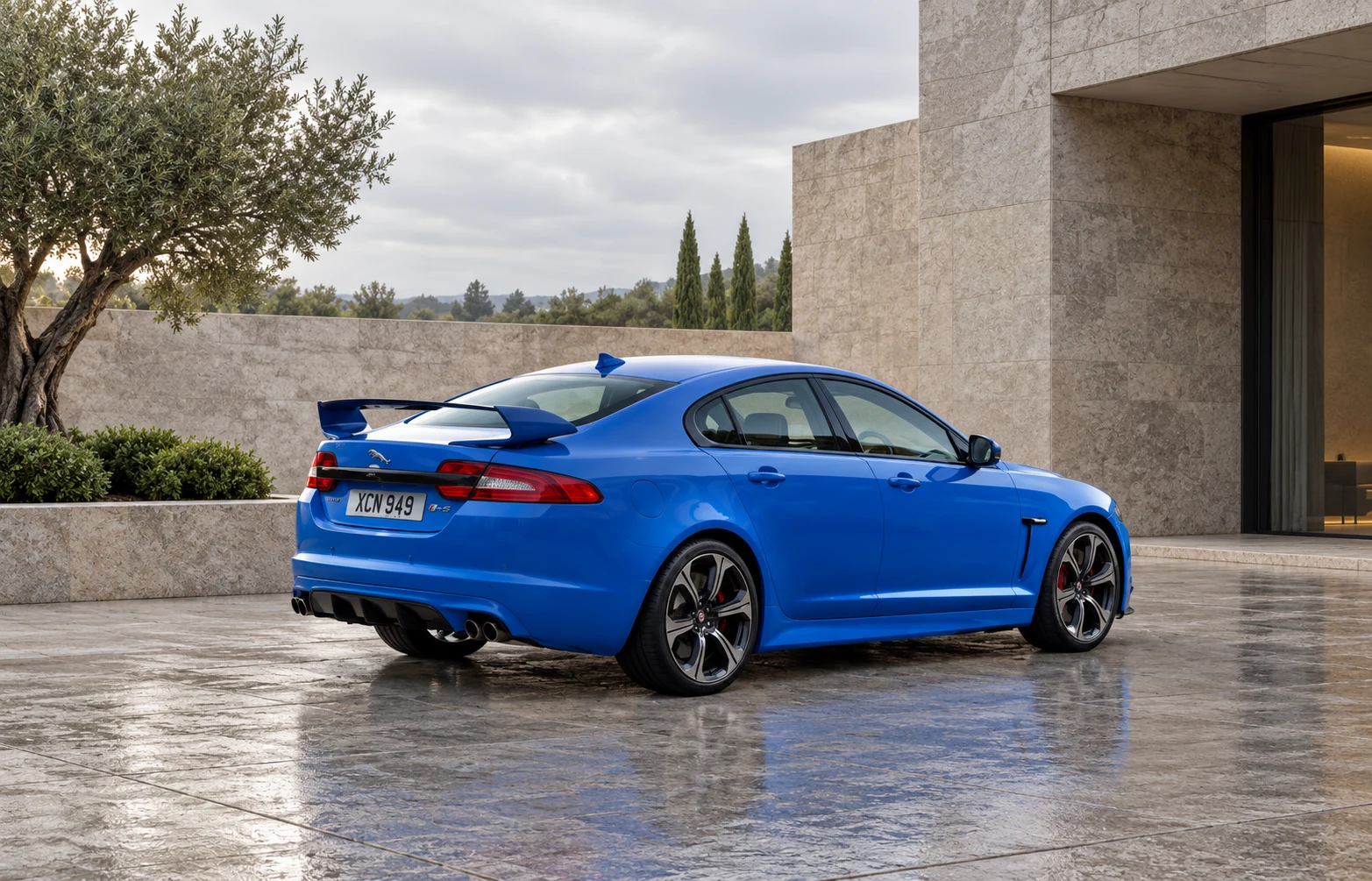
The deeper front bumper used larger lower intakes, vertical elements and a carbon-fibre splitter. Along the sides, extended sills and aero-blade mouldings behind the front wheels created defined airflow edges. The rear bumper sides were deeper too.
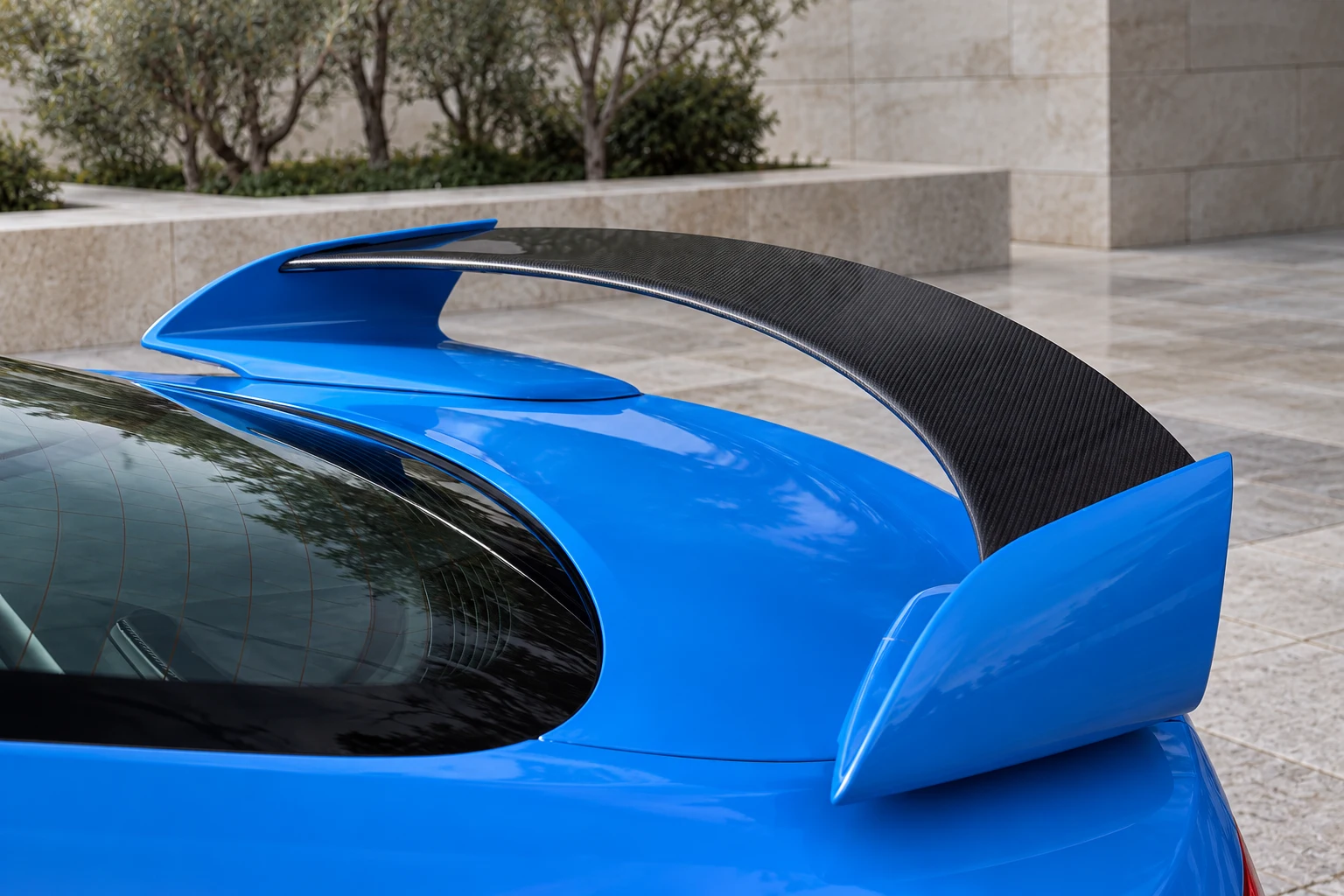
A carbon-fibre diffuser sat between the four exhaust outlets and extended further beneath the rear than the XFR item. The bootlid spoiler managed the air leaving the upper rear surface. Jaguar offered two spoiler designs; the larger wing used a carbon-fibre aerofoil centre section.
The combined body revisions produced the manufacturer’s quoted 68% reduction in overall lift. That number is not a drag-coefficient reduction and should not be converted into an invented downforce figure. It describes the aerodynamic comparison in the launch programme.
The cabin retained the XF architecture with R-S materials
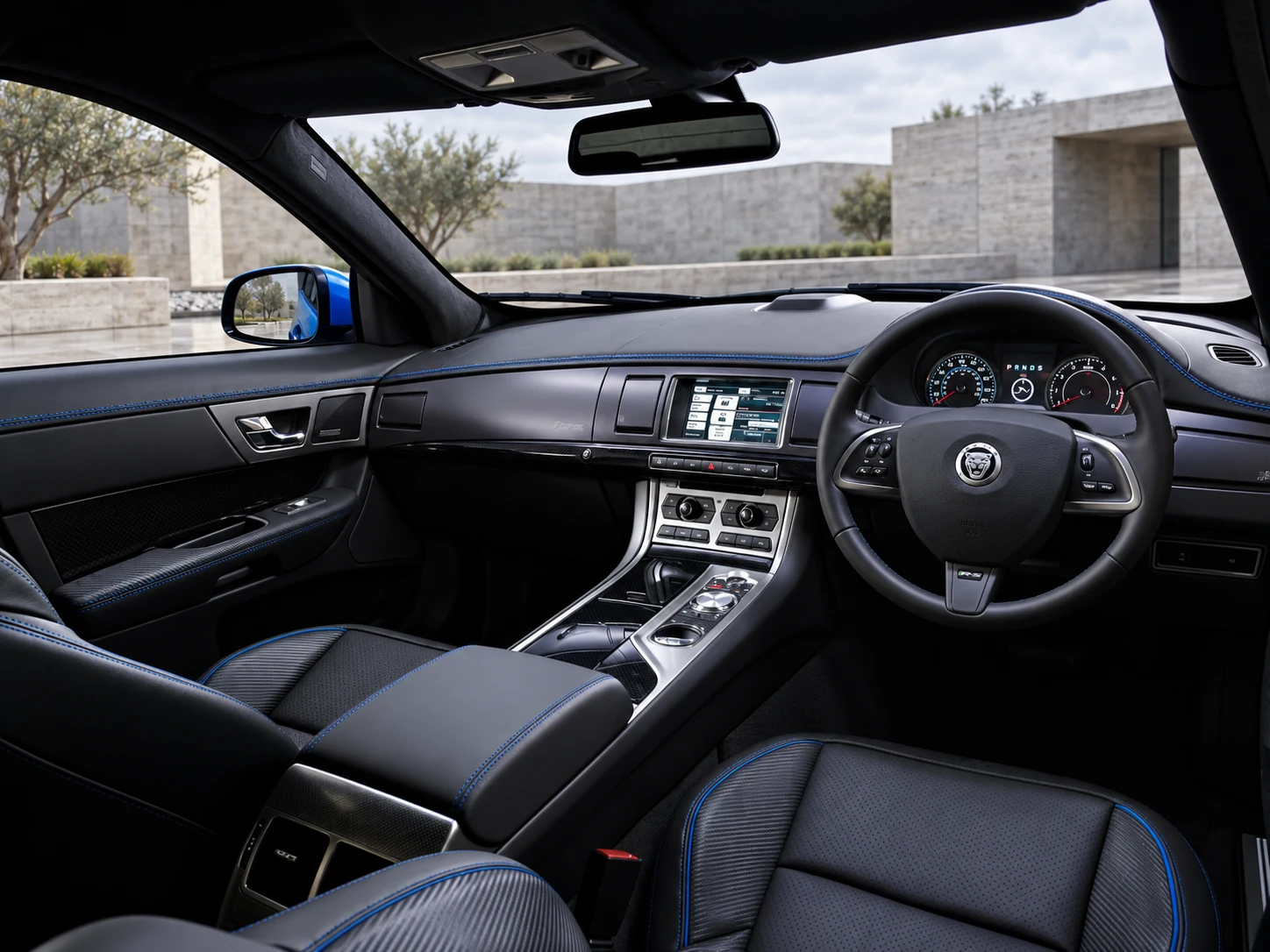
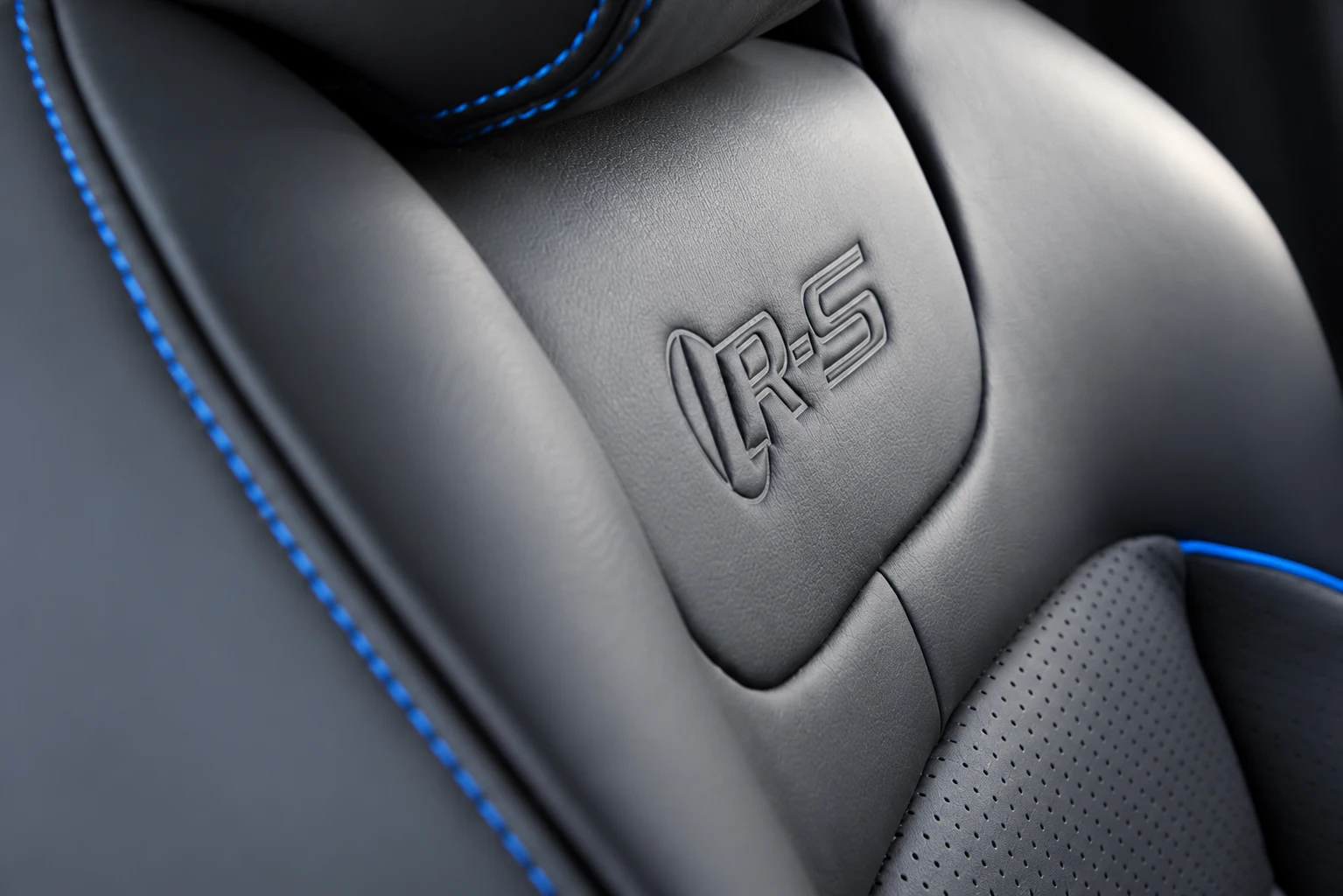
Warm Charcoal leather was combined with carbon-effect leather on the seat bolsters and armrests. The seats carried R-S embossing, with contrast micro-piping and stitching available in red, blue or ivory. Dark Aluminium fascia trim completed the model-specific treatment.
The five announced body colours were French Racing Blue, Ultimate Black, Stratus Grey, Polaris White and Italian Racing Red. The blue launch car was the most prominent visual statement, but it was not the only production choice.
The familiar rotary transmission selector and physical centre-stack layout remained. Engineering shared with F-Type did not mean that its SportShift lever or two-seat cockpit was transferred into the saloon.
Meridian specifications belonged to this installation
The detailed international XFR-S press kit listed a 380W system with 12 speakers as standard, with an optional 825W, 18-speaker arrangement using Meridian Trifield processing. The count belongs to that installation and document.
It should be kept separate from the audio configurations described for the XF/XJ summer update or the F-Type roadster. Similar amplifier output figures do not establish an identical speaker layout, head unit or vehicle configuration.
The launch figures in context
Jaguar quoted 4.4 seconds from rest to 60mph and 4.6 seconds to 100km/h. The two measurements use different target speeds and should remain separately labelled. The 300km/h maximum was electronically limited.
| Manufacturer launch data | XFR-S |
|---|---|
| Engine | 5.0-litre supercharged V8 |
| Power | 550PS / 405kW at 6,500rpm |
| Torque | 680Nm at 2,500–5,500rpm |
| Transmission | Eight-speed Quickshift automatic |
| 0–60mph | 4.4 seconds |
| 0–100km/h | 4.6 seconds |
| Maximum | 300km/h / 186mph, limited |
| EU combined / CO₂ | 11.6l/100km / 270g/km |
A complete performance saloon programme
The November 2012 reveal established XFR-S as more than an output badge. Its engine breathing, torque converter, shafts, suspension mountings, tyres, electronic controls and aerodynamic parts all contributed to the intended result.
This archive records the specification unveiled in Los Angeles. It does not convert Jaguar’s development descriptions into a road test by JLRTECH. The useful technical conclusion is the integration: the car’s performance depended on the whole configured vehicle.
Illustrations recomposed from period press imagery. Image licence.