JAGUAR XJ / ENGINEERING
The Jaguar XJ Nürburgring taxi: a luxury saloon with four racing seats
Jaguar’s engineering team kept the supercharged V8 saloon mechanically standard, then changed the cabin to carry passengers on demonstration laps.
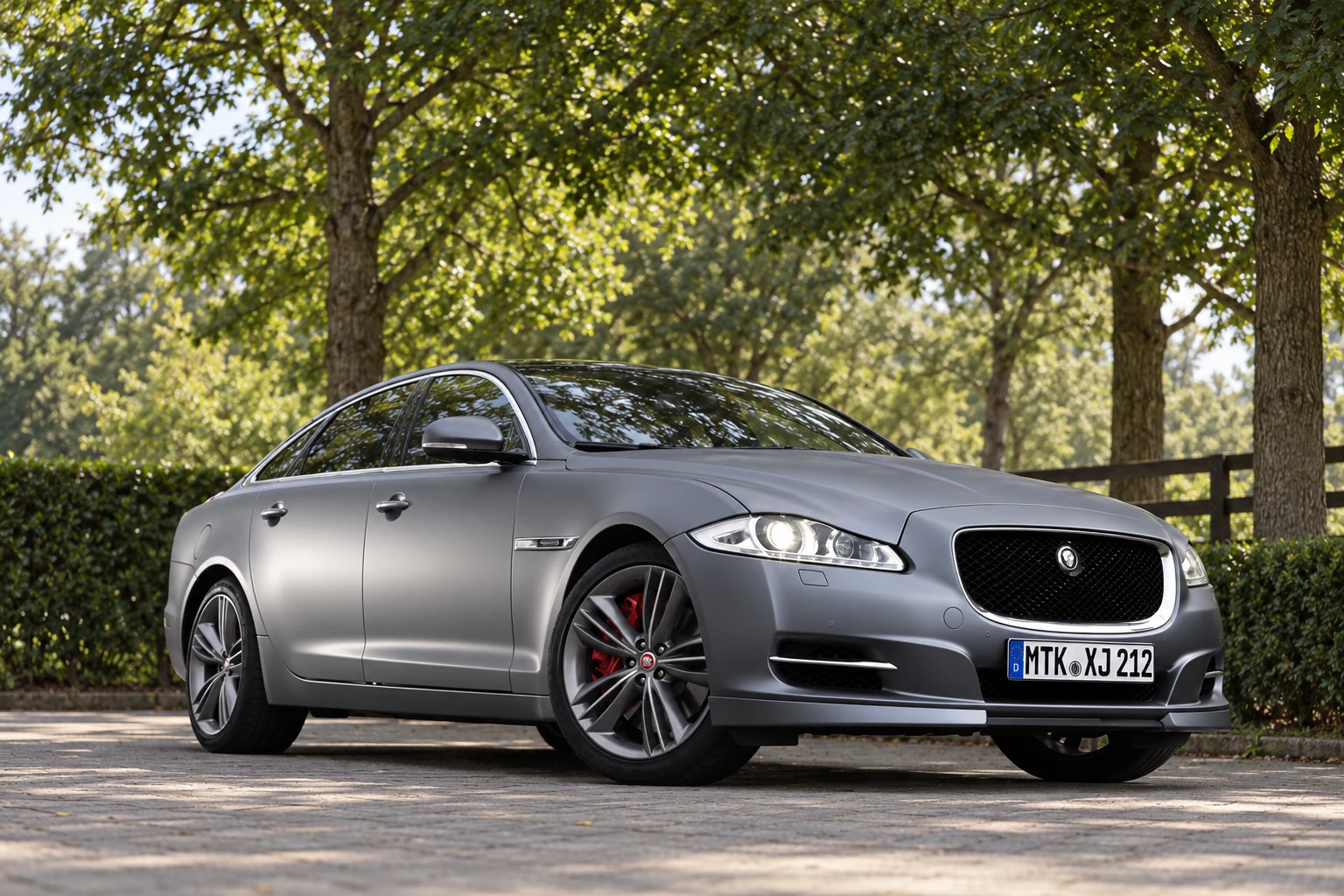
On 4 May 2012, Jaguar presented an unusual addition to the fleet at its Nürburgring Nordschleife engineering centre. The company called it a taxi, but its purpose was to carry passengers on fast demonstration laps with trained drivers. It was based on a long-wheelbase XJ Supersport, with a 5.0-litre supercharged V8 and the factory Sport and Speed Pack options.
The interest lies in the combination. A large aluminium luxury saloon retained its production mechanical specification while losing some familiar cabin comforts in favour of four racing seats, harnesses and a bespoke roll cage. This was an engineering-centre demonstration vehicle, rather than a newly announced retail trim level.
At a glance
- Presented on 4 May 2012.
- Long-wheelbase XJ Supersport with a 510PS supercharged V8.
- Speed Pack raised the electronic limit from 155mph to 174mph.
- Four racing seats, each with a four-point harness.
- A bespoke roll cage replaced the normal cabin arrangement around the occupants.
Why the long-wheelbase XJ was the starting point
Jaguar’s stated aim was to challenge expectations of a large luxury car. The XJ’s aluminium architecture provided the structural basis, while the long-wheelbase body left room for four occupants. Its size was therefore part of the demonstration’s point: passengers were being shown the capabilities of a substantial saloon, not a stripped two-seat sports car.
The announcement described the vehicle as otherwise mechanically standard once the Sport and Speed Pack specification was accounted for. It did not claim a special engine power increase, a unique racing transmission or a comprehensively rebuilt suspension. Adding those assumptions would misrepresent the car.
Sport Pack and Speed Pack did different jobs
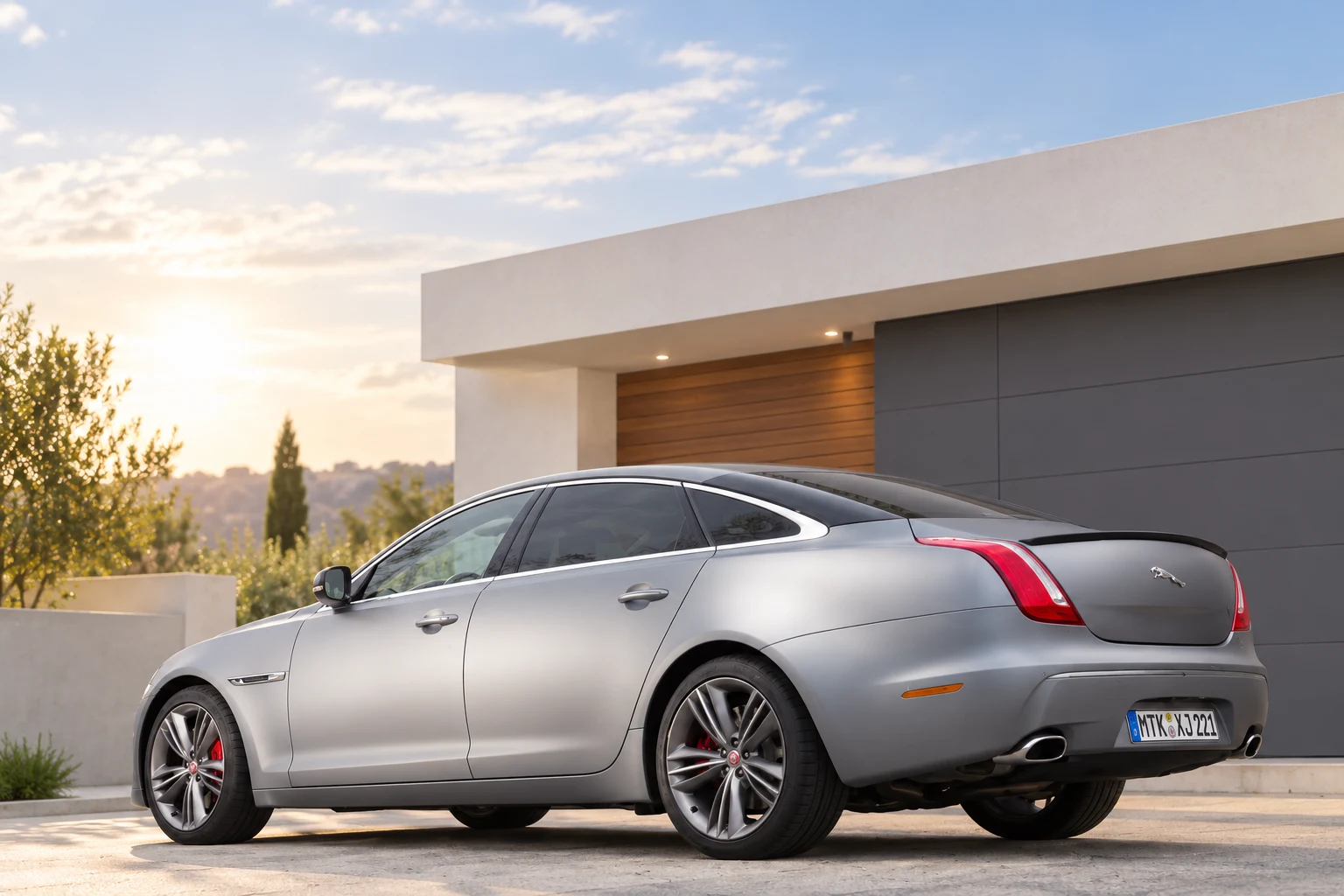
The exterior Sport Pack included a front splitter and an extended bootlid lip. Jaguar associated these changes with high-speed aerodynamic stability. It also brought a gloss-black grille, dark lower intake and side-vent details, red brake calipers and 20-inch Venom wheels with a diamond-turned sparkle-silver finish. The demonstration car added non-standard matt-grey paint.
Speed Pack addressed the electronic maximum-speed limit. For an eligible Supersport with the exterior Sport Pack, the limit rose from 155mph to 174mph, approximately 250km/h to 280km/h, through engine-management recalibration. The engine’s stated output remained 510PS. Raising a limiter and increasing engine power are different changes.
The packages themselves had been shown before this taxi project: Jaguar’s original Dubai announcement was dated November 2011. The event covered here is the May 2012 engineering-centre vehicle, rather than a claim that the packages first appeared at that moment.
The most substantial transformation was inside
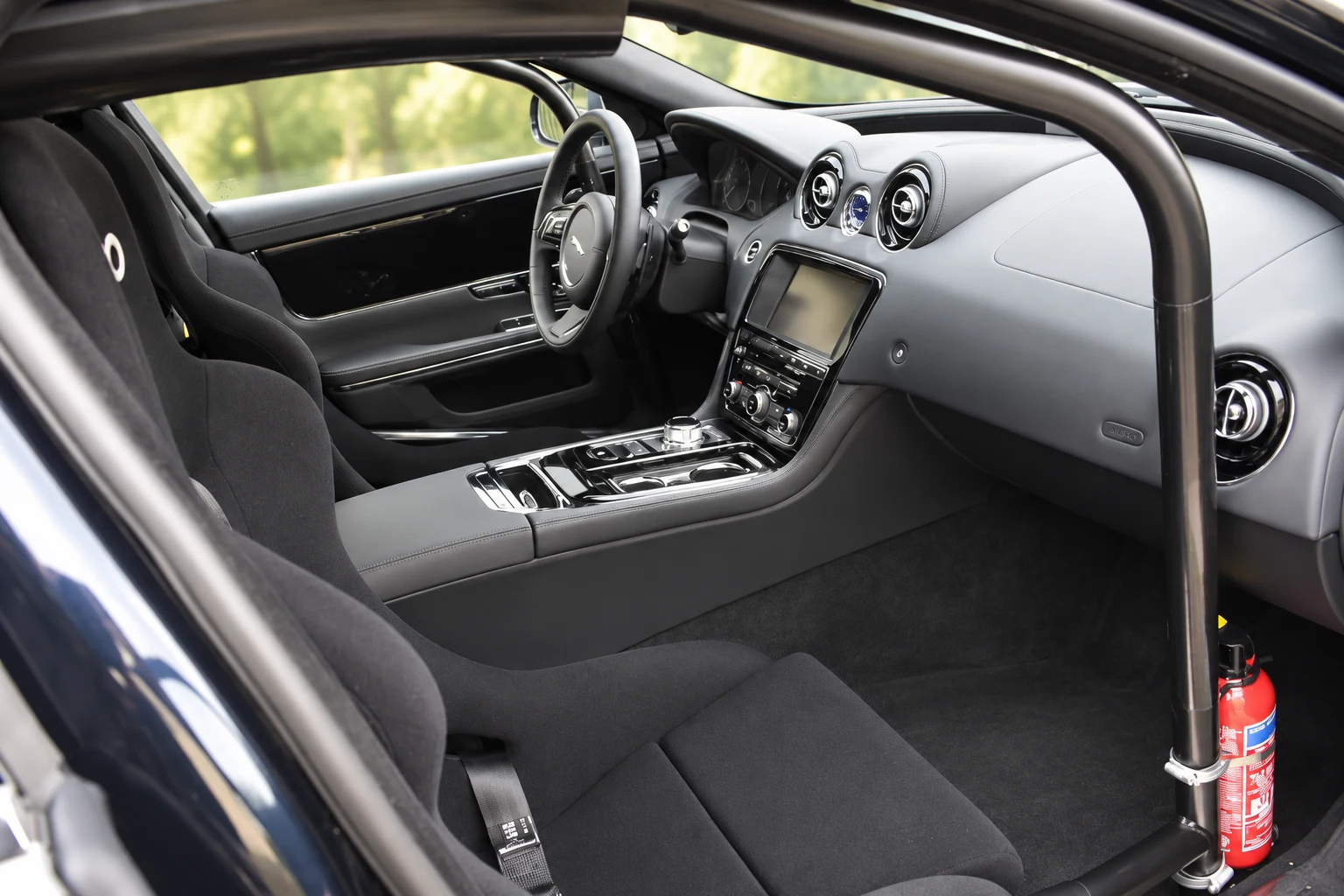
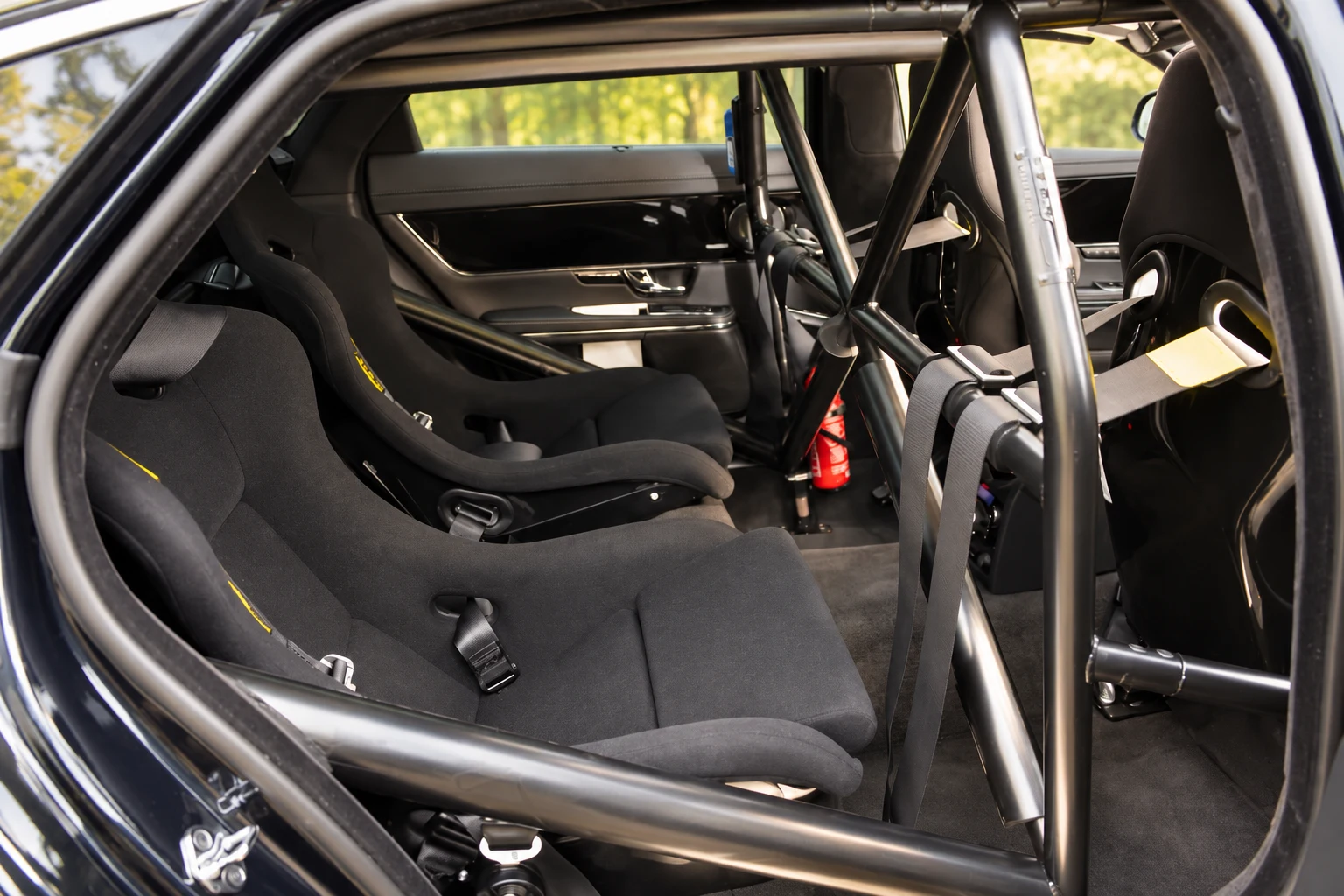
The normal heated and cooled leather seats made way for four racing seats. Each position received a four-point harness. A full bespoke cage completed the conversion described by Jaguar, changing both the cabin’s appearance and its intended use.
The front compartment still visibly belonged to an XJ: the dashboard, centre console and familiar control layout remained recognisable around the racing equipment. At the rear, the individual seats and harness arrangements made the departure from a conventional chauffeur-car cabin even clearer.
This was a specific engineered installation. The press announcement does not provide a transferable specification for fitting a cage or harnesses to a road car, and the factory Sport Pack’s optional road seats should not be confused with the taxi’s racing-seat conversion.
A demonstration programme, not our own road test
Jaguar said the vehicle would be driven by its trained drivers as part of its Nürburgring programme. The May announcement did not establish a public fare, an unrestricted booking service or a lap record. Calling it a taxi described its passenger-carrying role; the company expressly contrasted it with a conventional metered cab.
The engineering centre’s wider programme included XF, XJ and XK models. The XJ project gave that programme a distinctive demonstration car, allowing several passengers to experience the same lap. We have not driven or ridden in the vehicle, and the historical specification is not a substitute for a contemporary independent driving impression.
What makes this XJ worth remembering
The project’s character came from retaining the saloon’s identity. Its long body, aluminium structure and supercharged V8 remained central, while the interior equipment was reorganised around the demands of carrying passengers on track. It illustrated a very different use for the XJ without creating another production model.
For model history, the important distinctions are between the original Sport and Speed option packages, the taxi’s bespoke cabin conversion and Jaguar’s later performance derivatives. Keeping those separate preserves what was actually announced in May 2012.
Illustrations recomposed from period press imagery. Image licence.