JAGUAR / XJ ULTIMATE
Jaguar XJ Ultimate: the rear cabin became the main event
Two individual rear seats, a powered aluminium table and carefully integrated electronics gave the long-wheelbase XJ a different brief.
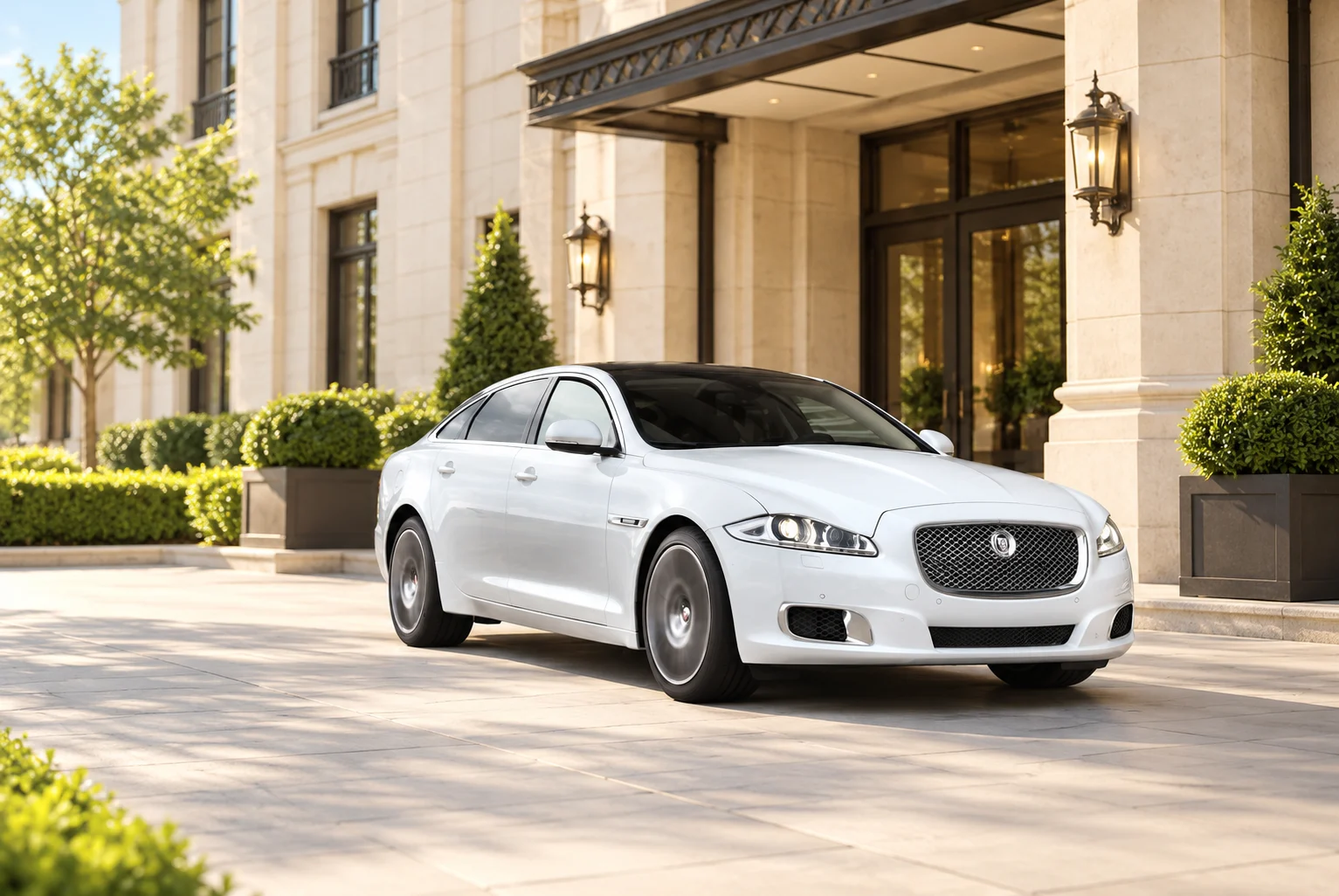
Jaguar revealed the XJ Ultimate in Beijing on 23 April 2012. Based exclusively on the long-wheelbase XJ, it concentrated the changes where a chauffeur-driven passenger would notice them: in the rear seats, their controls, the centre console and the entertainment equipment.
This was more than a new leather colour. The normal rear bench gave way to two individually tailored seats, separated by a full-length console. A powered table, tablet docks, a bottle chiller and a bespoke Meridian system made the cabin’s layout and electrical equipment central to the model’s identity. Suspension revisions supported the same emphasis on rear-seat comfort.
At a glance
- Global debut: Beijing, 23 April 2012.
- Long-wheelbase XJ only, with two individual rear seats.
- Powered aluminium table, integrated third-generation iPads and separate rear entertainment screens.
- Meridian surround sound: 15 amplifier channels and 20 loudspeakers.
- Announced engines: supercharged 3.0-litre V6, supercharged 5.0-litre V8 and 3.0-litre V6 diesel; all with eight-speed automatic transmission.
An individual seat, rather than an upgraded bench
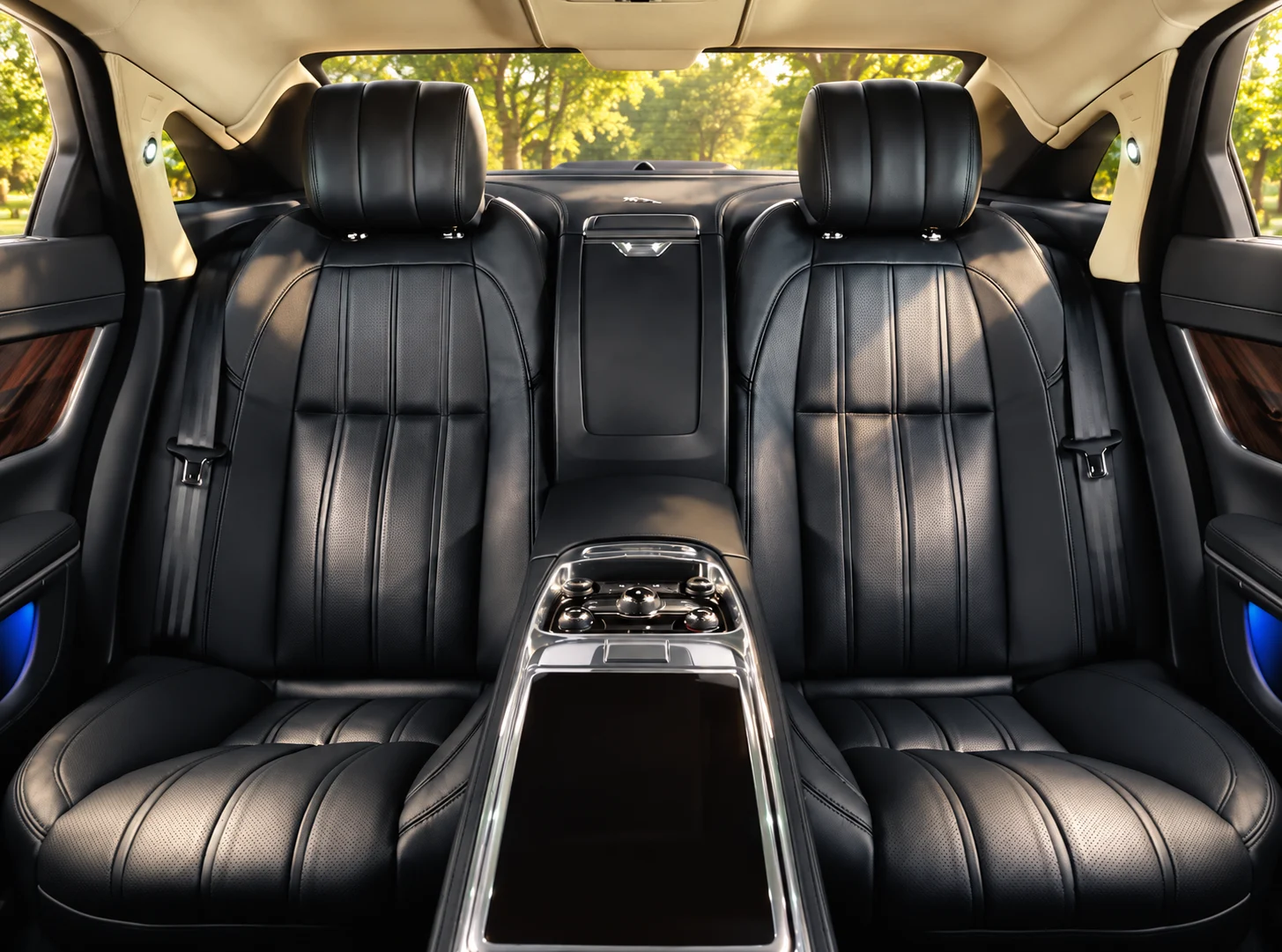
The rear seats were designed specifically for the Ultimate. Semi-aniline leather, winged head restraints, powered recline, four-way lumbar adjustment, heating, cooling and massage functions formed part of the accommodation. The front seats followed the same design theme, with their own broader range of powered movement.
A rear passenger could move an unoccupied front passenger seat forwards to gain more legroom. That feature makes sense within the long-wheelbase car’s intended use: the rear passenger’s space was treated as something that could be actively managed, alongside the seat position and local climate.
The permanent centre console also defined how the space was used. This was a four-seat environment with two distinct rear positions, rather than a conventional bench dressed in more expensive upholstery.
The table was a mechanism, not a loose accessory
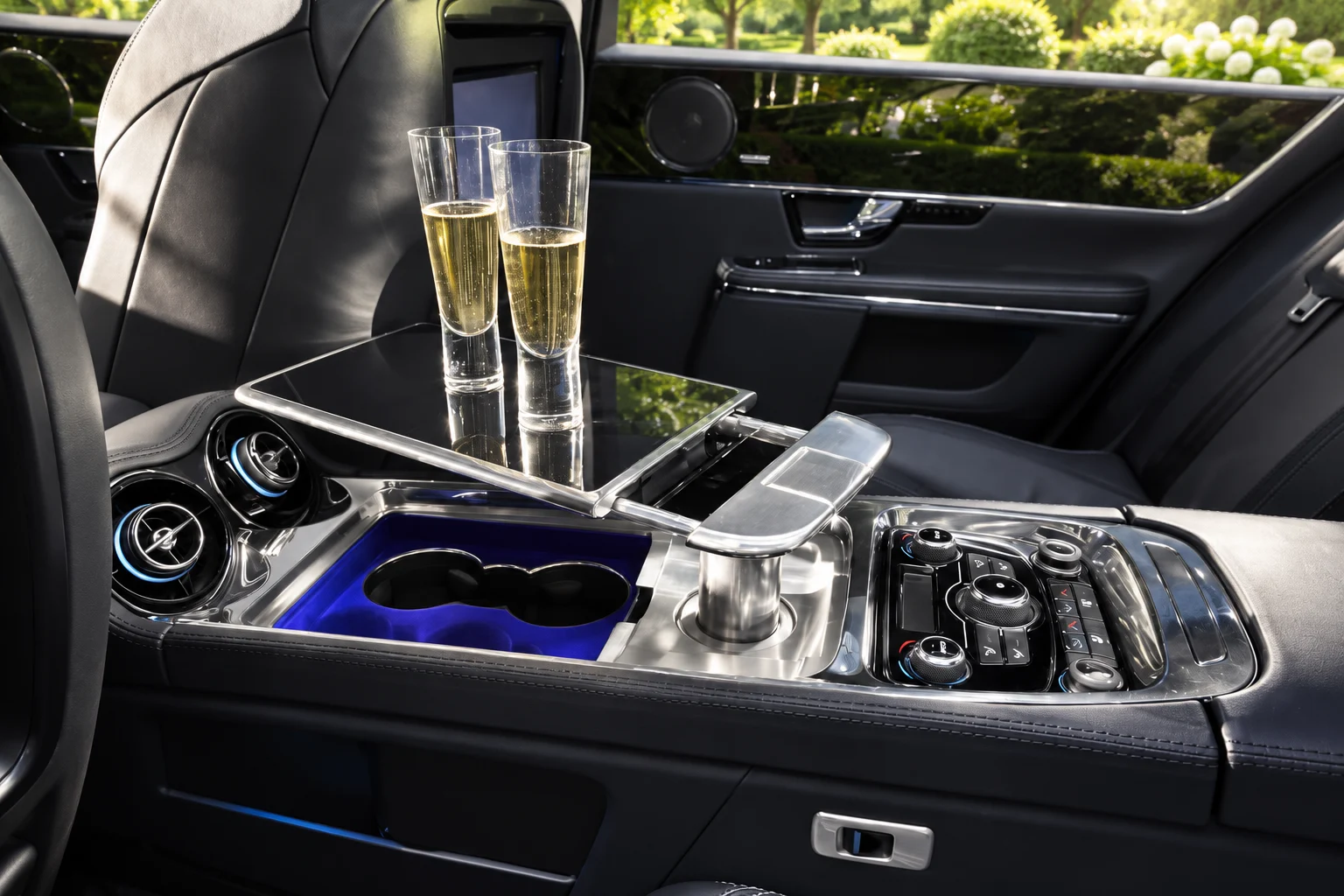
A table machined from solid aluminium rose electrically from the centre console. Piano-black and chrome finishes tied it into the surrounding trim. Once raised, it could be pivoted towards the passenger using it. Underneath was a dedicated, illuminated storage recess for two specially commissioned champagne flutes.
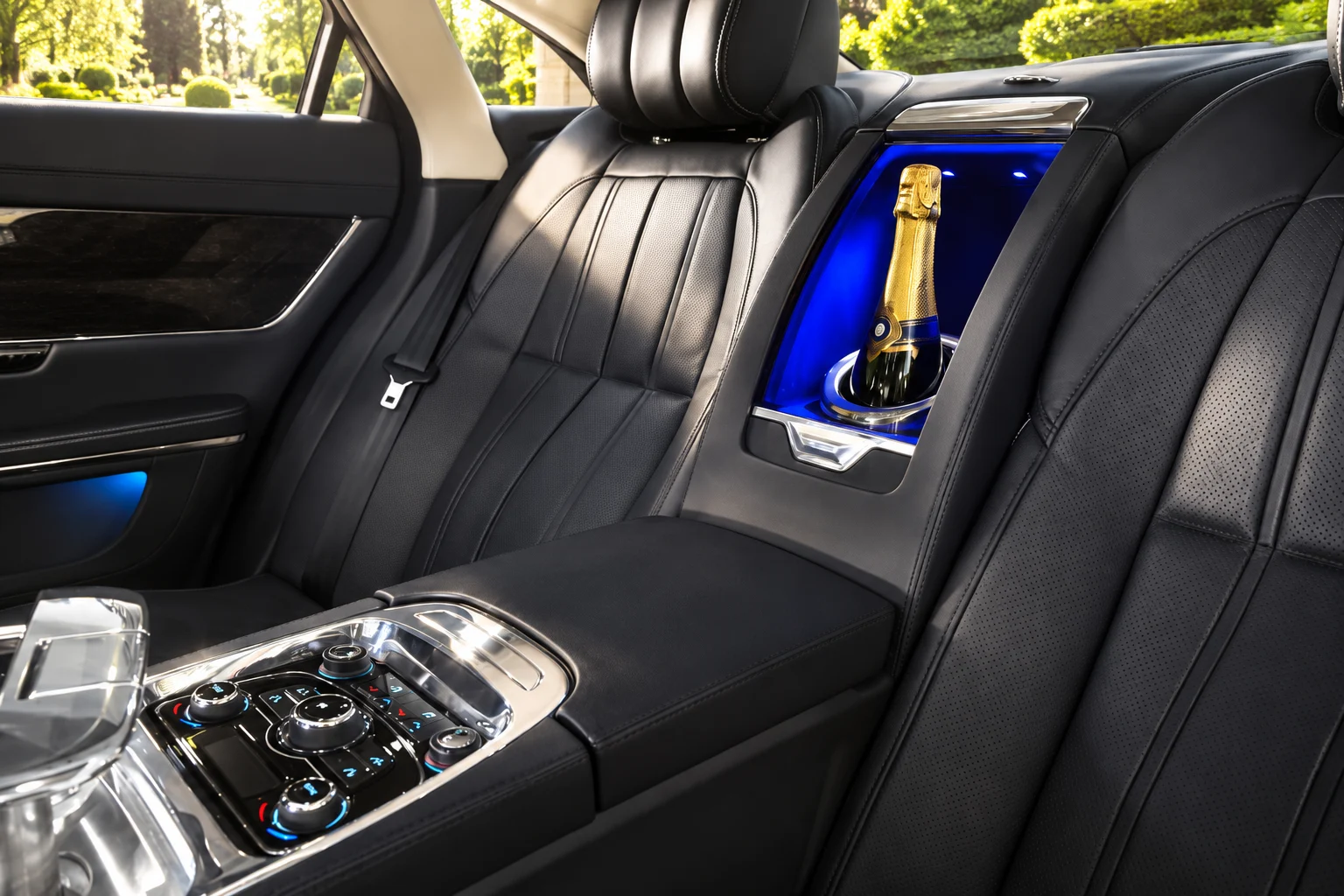
The bottle chiller occupied the space between the rear seat backs. Jaguar specified a cooling range of 7–10°C and a mechanism that presented the bottle forwards when the cabinet opened. These were separate pieces of equipment: the table, glass storage and chiller were integrated into the same cabin arrangement, but performed different jobs.
The console continued through the cabin with leather, storage areas and blue ambient lighting. Describing the Ultimate simply as an XJ with a refrigerator misses how extensively that central area had been rethought.
Two kinds of screen served different purposes
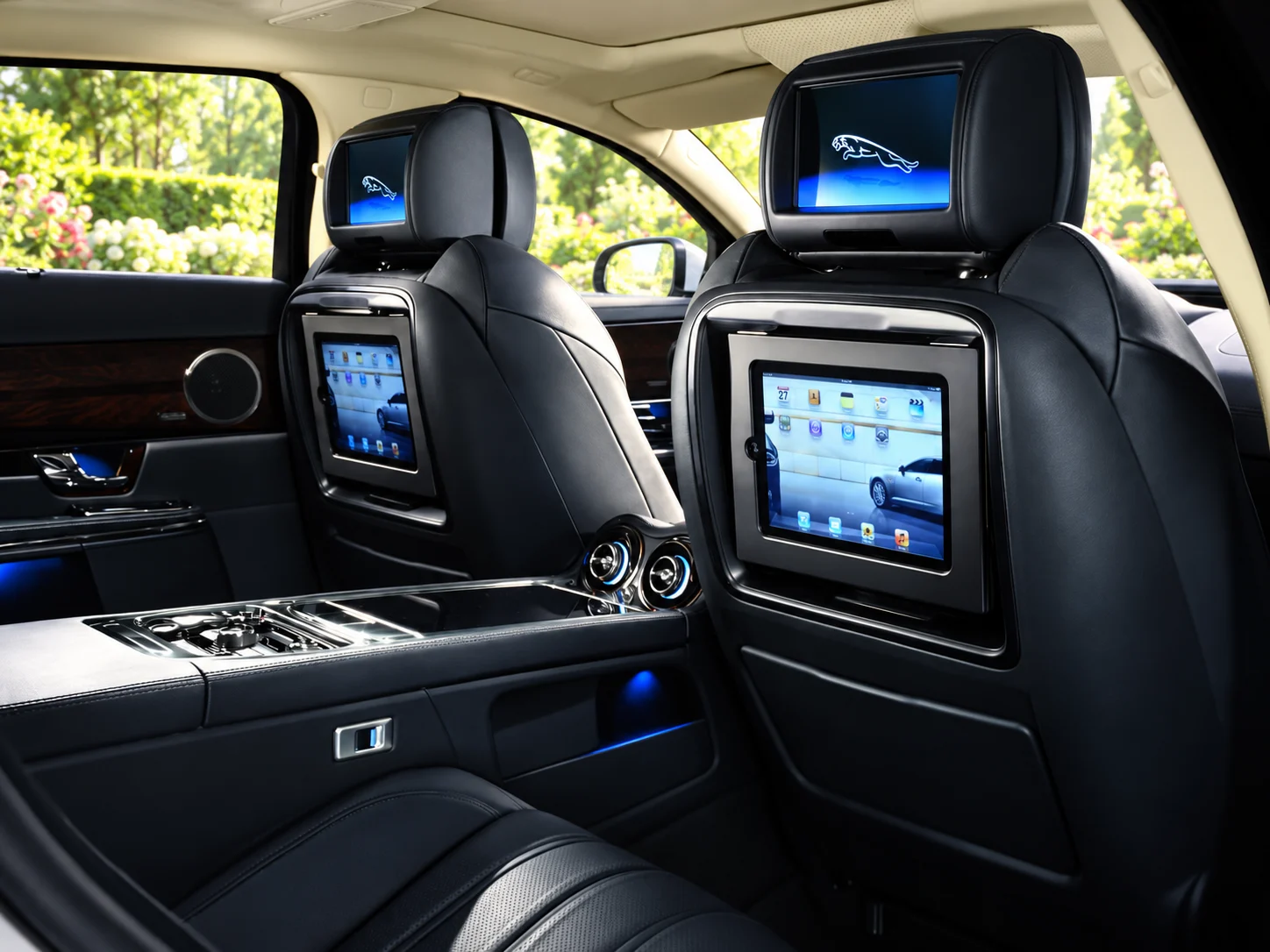
The Ultimate combined Jaguar’s rear-seat entertainment system with a pair of third-generation iPads and wireless keyboards. The tablets sat in leather-trimmed docks in the backs of the front seats, behind roller doors. They were charged while the ignition was on, and the keyboards could be used without removing the tablets from their docks.
Separate eight-inch screens were installed in the front head restraints. Those belonged to the car’s entertainment system, with inputs from the DVD player, digital television tuner or an external media device. USB and RCA connections were provided through the Rear Media Interface, while wireless headphones let the passengers listen separately.
These were complementary systems, not four identical displays connected to one modern tablet interface. A wireless rear controller also handled functions including entertainment, the individual climate zones and seat heating and cooling. Keeping the original arrangement clear avoids attributing later connected-car features to the 2012 launch.
Meridian was part of the car's electronic specification
The audio installation used 20 loudspeakers and a 15-channel amplifier. Jaguar described Meridian’s Trifield processing, cabin correction and dynamic volume control as parts of the system developed for the XJ. The objective was to manage the sound field within the cabin rather than rely on speaker count alone.
That also distinguishes the audio installation from the rear passengers’ headphones and from the tablets. They belonged to the same overall experience but were not interchangeable descriptions of one device. For an existing vehicle, the correct equipment list should identify which original systems are present before discussing a replacement component.
The exterior gave quieter clues
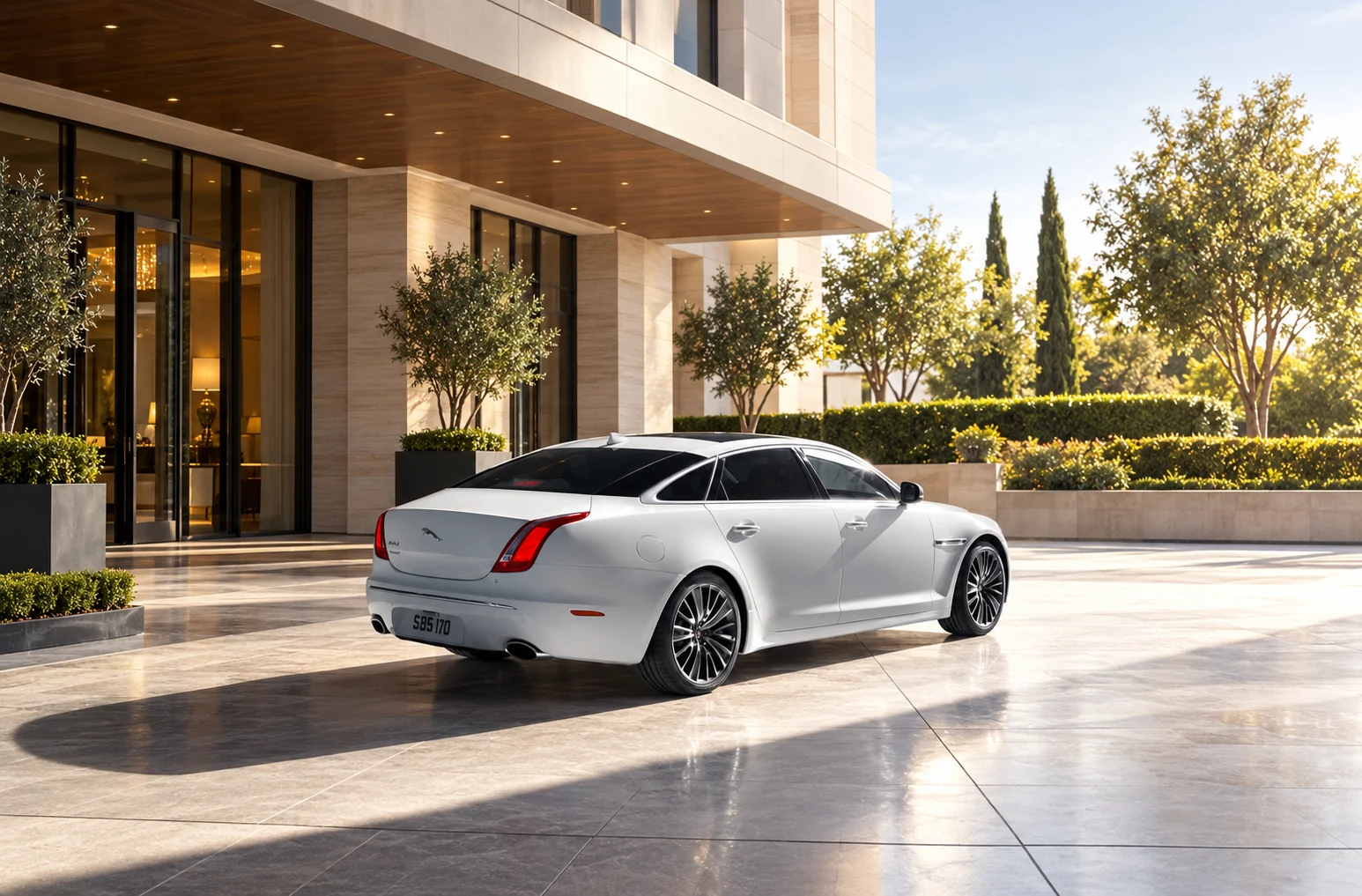
Outside, the Ultimate retained the XJ’s aluminium body architecture and long-wheelbase proportions. Reshaped lower front intakes received a chrome finish, while the exhaust outlets used polished stainless-steel oval finishers. Unique 20-inch Maroa forged alloy wheels combined dark inner surfaces with polished outer faces.
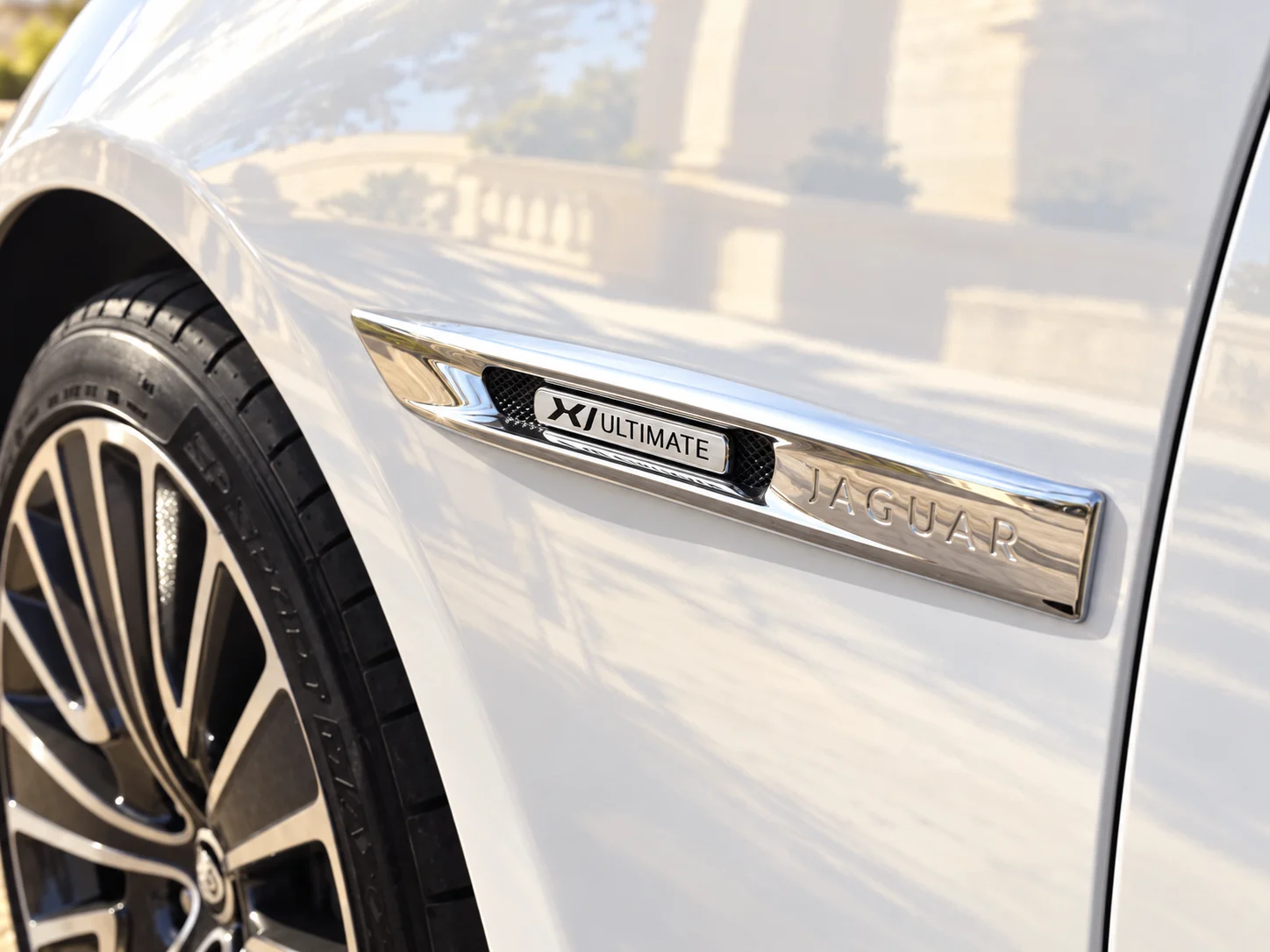
Ultimate identification appeared in the front-wing vents and beneath the XJ name at the rear. The first 20 cars were announced in Celestial Black, but the colour programme extended beyond black, including Polaris White and bespoke matching. A white press car is therefore consistent with the launch specification, rather than evidence of a different edition.
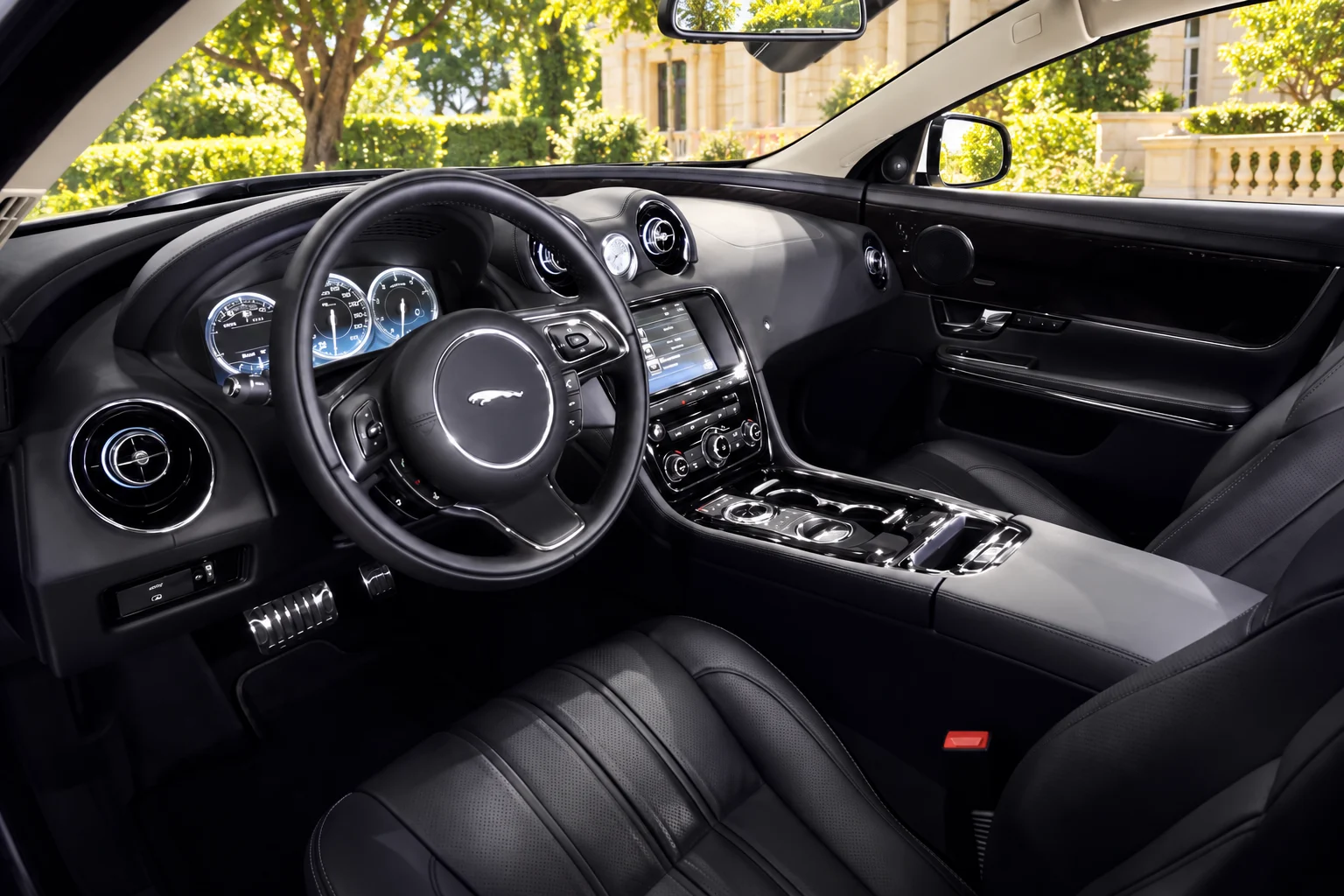
The interior offered Herringbone-pattern veneer and a special dashboard clock, with personalisation extending to details such as embroidered head restraints. Those trim choices complemented the rearranged rear cabin rather than replacing its functional differences.
Three engines, one transmission principle
The launch described three powertrain choices, subject to market availability. The established supercharged 5.0-litre V8 was joined by the 3.0-litre V6 diesel and the newly announced supercharged 3.0-litre petrol V6. All drove the rear wheels through an eight-speed automatic.
For the new petrol V6, the Ultimate release specified 340 PS and 450 Nm, together with Intelligent Stop-Start. The 380 PS version announced in the same Beijing programme was reserved for the forthcoming F-TYPE; it should not be folded into the Ultimate’s specification. The V8 figure given for the Ultimate was 510 PS and 625 Nm.
Rear air-suspension revisions were intended to improve ride compliance. That is the manufacturer’s stated engineering aim, rather than a road-test verdict from us. No claim about ride quality on today’s roads follows merely from repeating the announcement.
| Launch powertrain | Quoted output | Transmission |
|---|---|---|
| 3.0 V6 supercharged petrol | 340 PS; 450 Nm | Eight-speed automatic; rear-wheel drive |
| 5.0 V8 supercharged petrol | 510 PS; 625 Nm | Eight-speed automatic; rear-wheel drive |
| 3.0 V6 diesel | Diesel alternative in the launch range | Eight-speed automatic; rear-wheel drive |
Understanding a surviving Ultimate
An Ultimate’s identity rests on its factory configuration, especially the two rear seats, centre-console mechanisms, tablet docks and associated equipment. A collection of Ultimate badges is not a substitute for that specification. Conversely, a missing period tablet or luggage item should be documented as an equipment question rather than used alone to judge the whole car.
When an electronics enquiry concerns a seat, display or console function, identify the affected device and photograph its original label before ordering parts. Our guide to preparing information before buying a replacement module explains the useful starting details. The presence of a feature in this historical article does not establish the availability of a particular repair or retrofit.
The XJ Ultimate’s significance was the coherence of that original package. Its passenger space, powered fittings, media systems and chassis brief were developed around the same purpose: making the rear of the long-wheelbase XJ the centre of attention.
Illustrations recomposed from period press imagery. Image licence.