RANGE ROVER / EVOQUE CONCEPT
Range Rover Evoque Convertible Concept
A four-seat soft-top study asked whether the Evoque could keep its distinctive character without a fixed roof. Its announcement and Geneva appearance were a design experiment, with no production programme confirmed at the time.
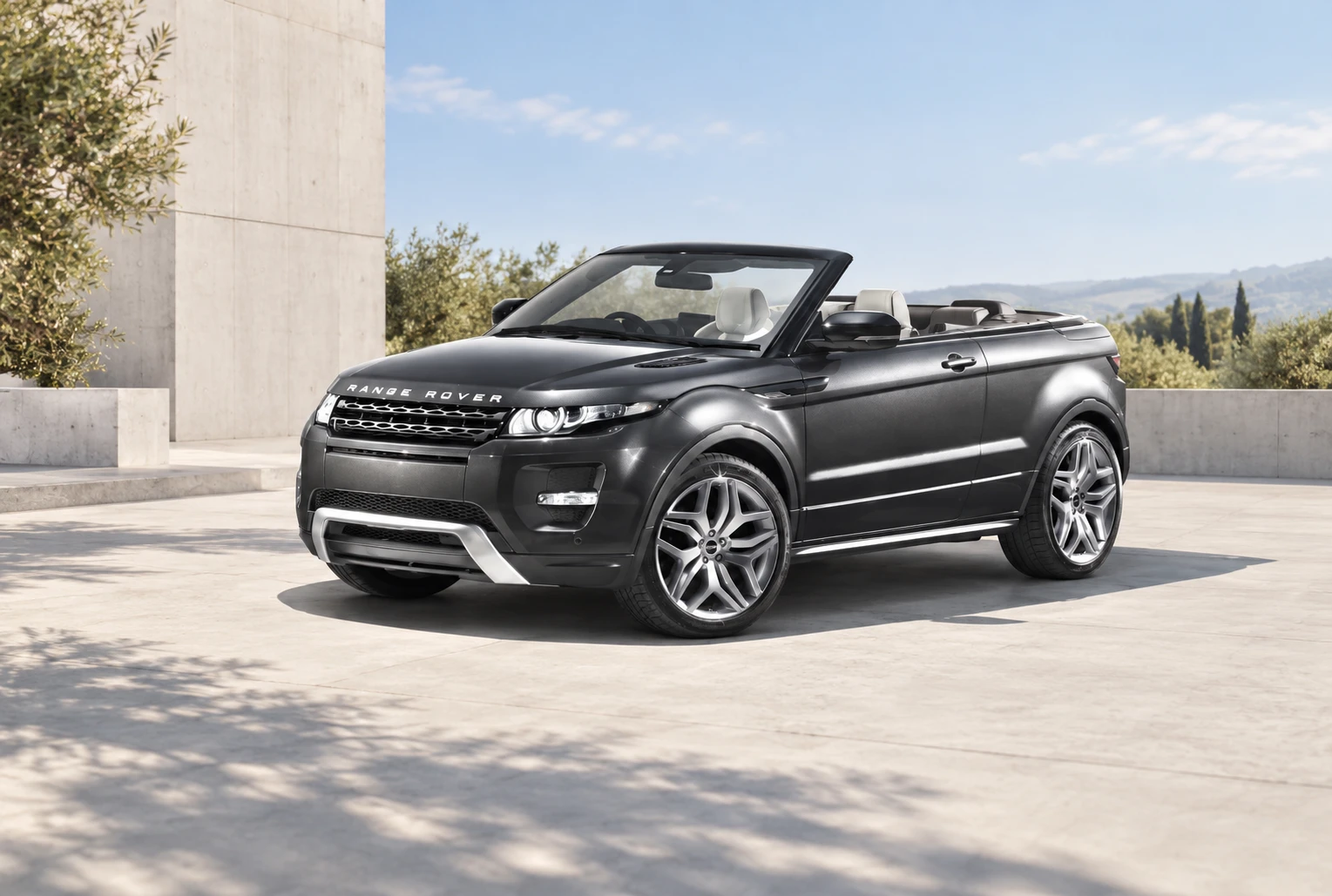
Land Rover announced the Range Rover Evoque Convertible Concept on 24 February 2012. On 6 March it appeared at the Geneva Motor Show, where the company used it to explore interest in a premium open-top SUV. The distinction between those two dates matters: the first introduced the idea and images; the second marked the motor-show debut.
The proposal started with the three-door Evoque Coupé. Rather than simply describing a missing roof, the concept presented a four-seat layout, a retractable fabric hood and a revised rear body. Land Rover wanted to see whether the familiar Evoque silhouette could support another kind of driving experience.
At a glance
- Announced on 24 February; shown in Geneva on 6 March 2012.
- Based on the Evoque Coupé, with four seats and a fabric roof.
- A design and engineering study; production was not confirmed.
The shape had to work with the roof down
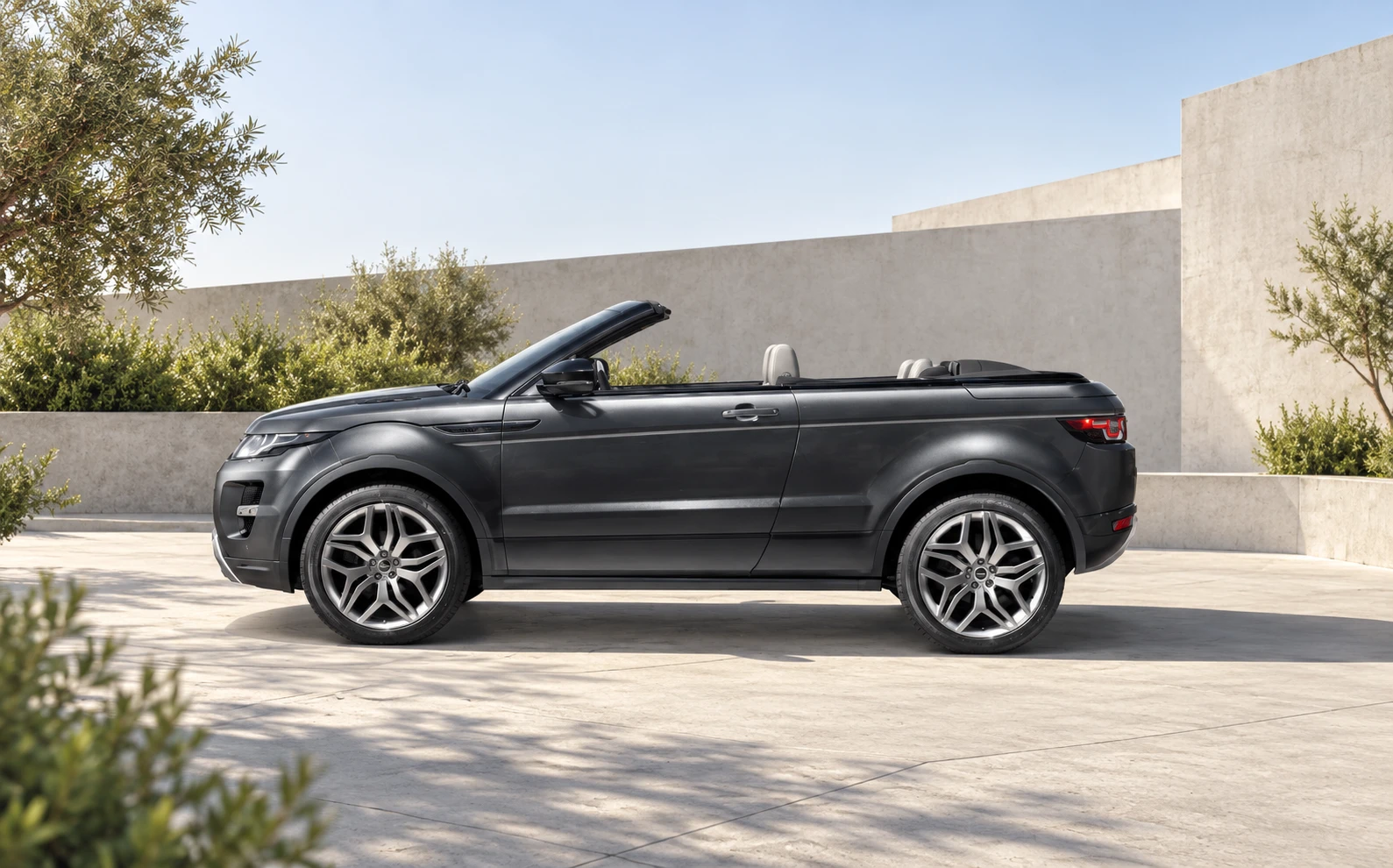
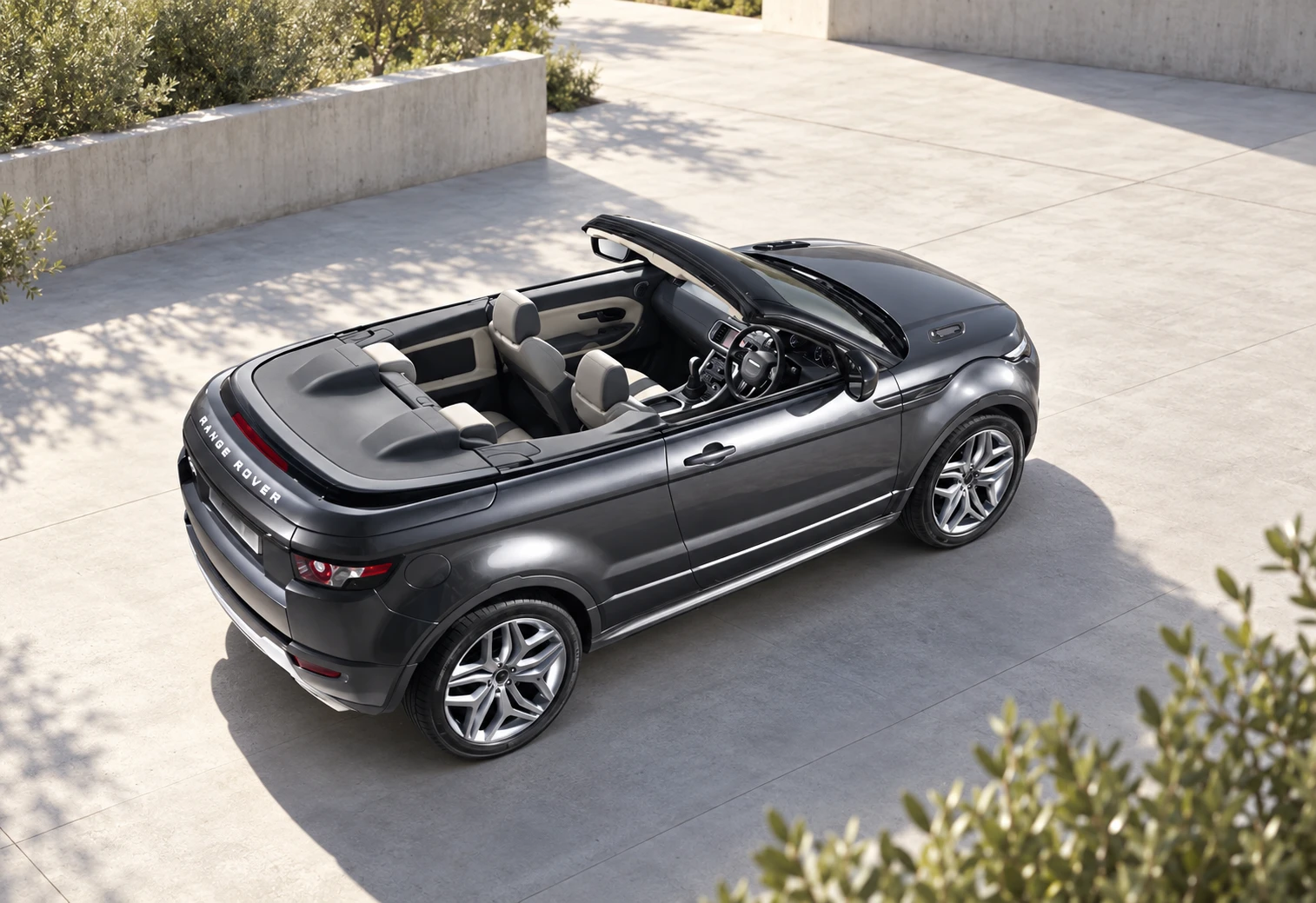
The rising body line remained central to the concept. With the roof open, it formed a continuous visual boundary around the passenger compartment. The folded hood and mechanism were intended to sit below that line, contained by a tapered rear finisher. The aim was to preserve a recognisable shape in the very condition that removed one of the Coupé’s strongest visual features.
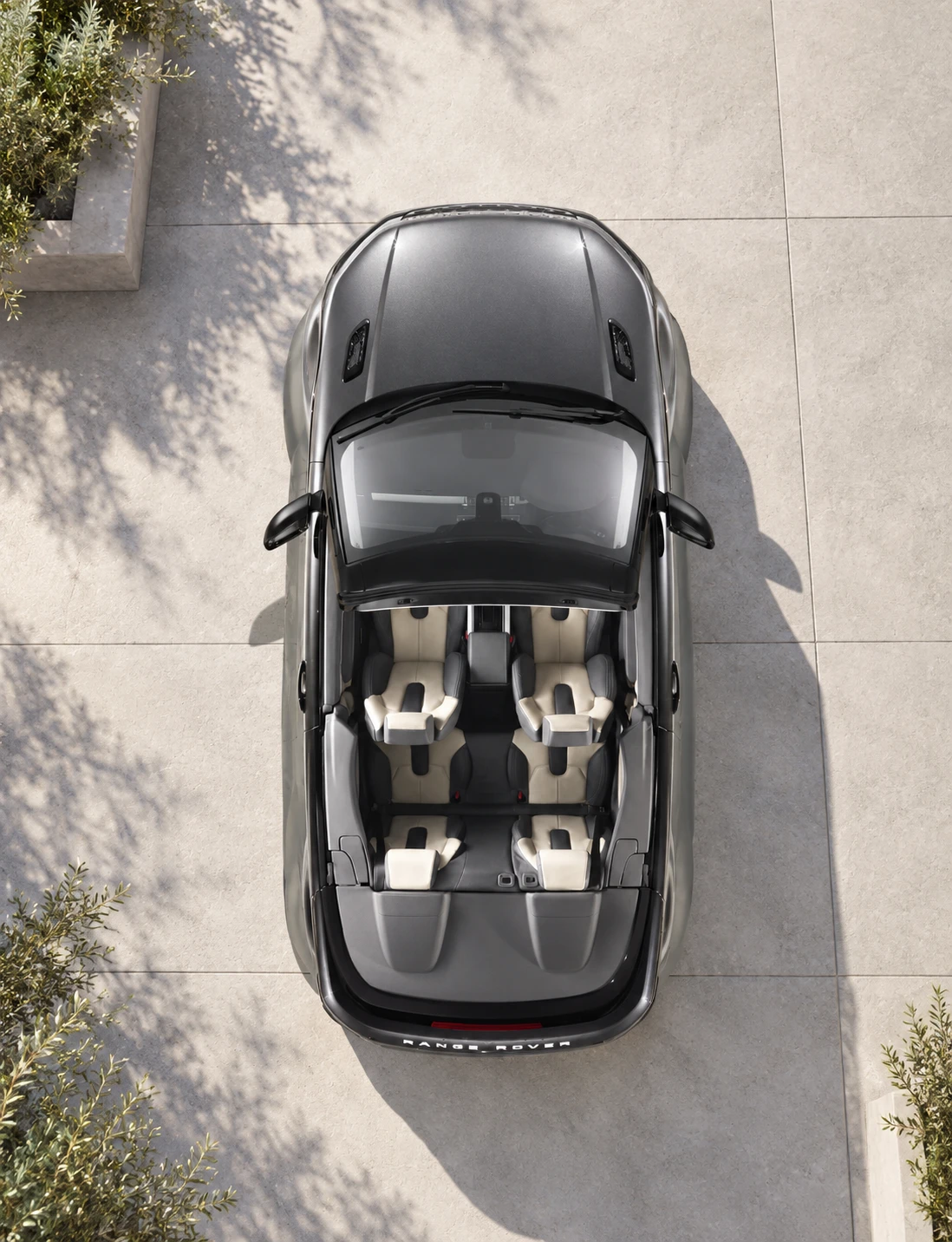
That is the useful design story in these images. The relationship between the windscreen, long doors, rear seats and rear deck shows how the open body was organised. A later production photograph would not be an interchangeable illustration of this specific study.
Four seats and a different rear arrangement
The announcement described four seats, a drop-down tailgate and a Roll Over Protection System, or ROPS. These details made the concept more than a styling sketch: it presented an intended passenger layout and a route for addressing the requirements of an open body.
The source did not publish a complete engineering validation report. A named protection system should therefore not be treated as a crash-test result, and the presence of rear seats does not establish adult accommodation measurements or luggage capacity. Those figures should remain absent rather than being borrowed from another vehicle.
The cabin retained a familiar technology theme
Terrain Response, surround cameras and Park Assist were among the features listed. The cabin also included an eight-inch Dual View touchscreen and Meridian audio. These items connected the unusual roof treatment to the wider Evoque idea: a high driving position and an equipment package associated with the existing model family.
For readers interested in electronics, the distinction is between a feature named in a concept announcement and a confirmed parts specification for a customer car. A touchscreen size or audio brand does not identify an interchangeable control unit. The study is useful historical context, not a catalogue of replacement modules.
Announcement, debut and uncertainty
| Date | What happened | What it established |
|---|---|---|
| 24 February 2012 | Concept announcement | Design, equipment and intended four-seat layout |
| 6 March 2012 | Geneva motor-show debut | Public presentation and reaction gathering |
| At the time of those events | No confirmed production programme | No final customer-car specification or launch price |
The concept’s own visual specification
The February specification identified Causeway Grey metallic paint, 21-inch Titan silver wheels and a Lunar/Ivory cabin with perforated leather panels and contrasting stitching. These details help distinguish the original presentation from other open-top Evoque images encountered in later coverage.
They also explain the image selection here. The front view establishes the original bumper and lamps; the profile shows the uninterrupted body line; the elevated views explain the four-seat layout and the deck behind it. Each illustration has a different job rather than merely repeating a similar exterior angle.
What the early engineering reports actually meant
Contemporary reporting discussed the additional reinforcement an open body would require. Around 75 kg was quoted as an engineering expectation, while possible engines and a route to production were also discussed conditionally. Those reports record the questions being asked in 2012; they do not amount to a final production specification.
Land Rover’s own announcement described limited changes to weight and torsional rigidity without supplying a full numerical comparison. It is more accurate to preserve that distinction than to present an estimate as a measured kerb weight. The same care applies to acceleration, fuel consumption, roof operating times and launch prices: a later answer must not be inserted into the earlier announcement.
Geneva was a public test of the idea
At Geneva, the concept was shown alongside other Land Rover exhibits while the company assessed the response to a different kind of Evoque. Its purpose was to investigate potential demand. The fact that the car looked complete did not convert the display into an order-book announcement.
This is why the concept deserves its own place in an archive. It captures an earlier decision point, when the shape and proposition were public but a production plan was not confirmed. Keeping that uncertainty visible makes the history clearer than writing it backwards from subsequent events.
A useful boundary for owners and researchers
A concept can explain the origin of a design direction, but an actual service enquiry must begin with the customer vehicle. Confirm the VIN, build information, installed equipment and exact symptom. Open-top appearance alone cannot establish the correct electronics, keys or software.
For a current access-system enquiry, our Smart Key and keyless diagnostics information describes the relevant service context. It should be read separately from this historical design study; the concept’s feature list does not promise support for every later vehicle or component.